Devlog Field note 02
Finding Valumo’s look
Four art directions, one adventurer, and the rules that became “Fábula Voxel”: proportions, flat faces, painted shadows and very few lights.
- Published
- Topic
- Art direction
Retrospective Written on 23 November 2026 about milestones finished before this journal existed.
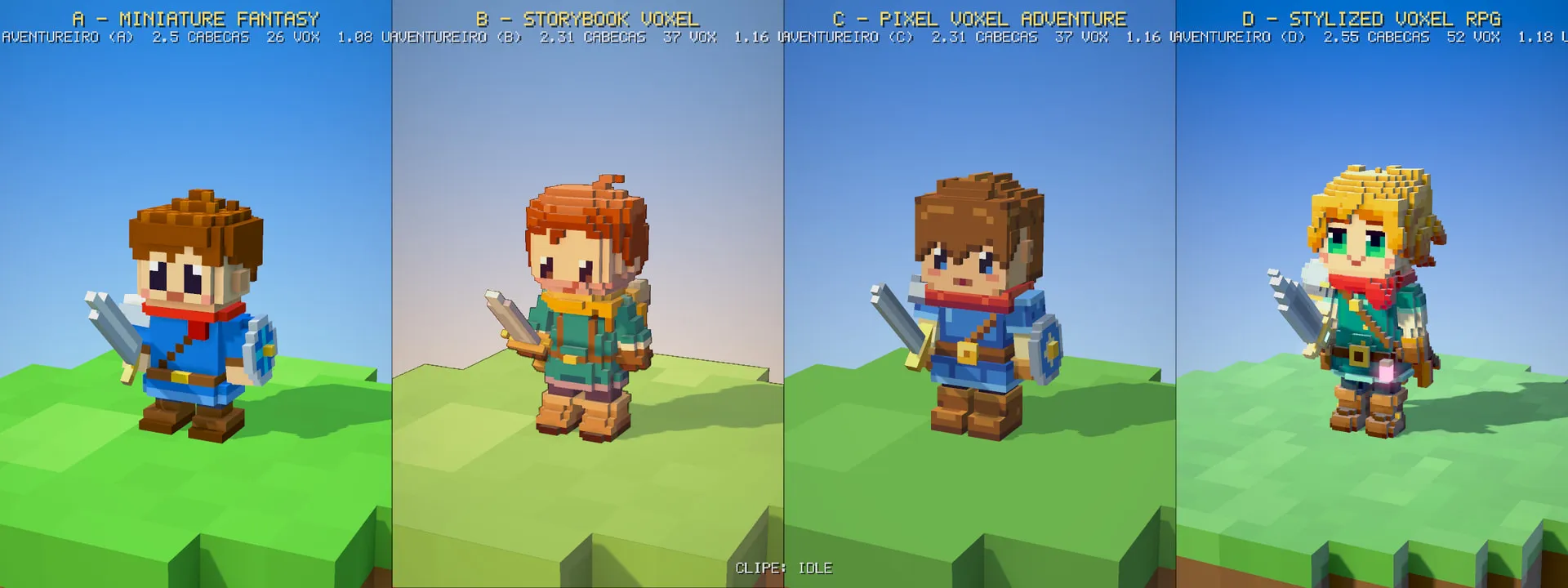
Before there was anything to play, there was a question about feel: can a voxel RPG have small, charming characters without them reading as “people made of cubes”? The first art rounds answered it by building the same small world four times.
Four directions, side by side
The first round built the same heroes, creatures and clearing in four directions and put them in one viewer, with the same cameras, so they could be judged against each other rather than from memory:
- A — Miniature Fantasy: classic chunky voxels and bright colours. It reads instantly and is cheap to make, but it was also the most generic of the four, and the closest to the genre’s best-known references.
- B — Storybook Voxel: rounder shapes, a warm palette, a cottage slightly out of plumb, an ink-like outline. It had the most identity of its own and the most inviting scene.
- C — Pixel Voxel Adventure: cuboids with pixel-art textures. The lightest to run, but trees in boxes pulled it towards “a block game with nicer models”.
- D — Stylized Voxel RPG: finer voxels and real materials. It had the best characters — eyes with an iris and a highlight, hair in locks — and it was also by far the heaviest to render on the integrated graphics chip used for testing.
The most useful finding was about proportion, not style. At about 2.3 to 2.6 heads tall, with legs at no more than about 30% of the height, a character reads as a miniature. At 3.5 to 4 heads it turns back into a person made of cubes. Scale does the rest: a door is one and a half times the hero, a house four times, the trees four to eight times. That is where “a small adventurer in a big world” stops being a slogan and becomes a measurement.
The fifth direction
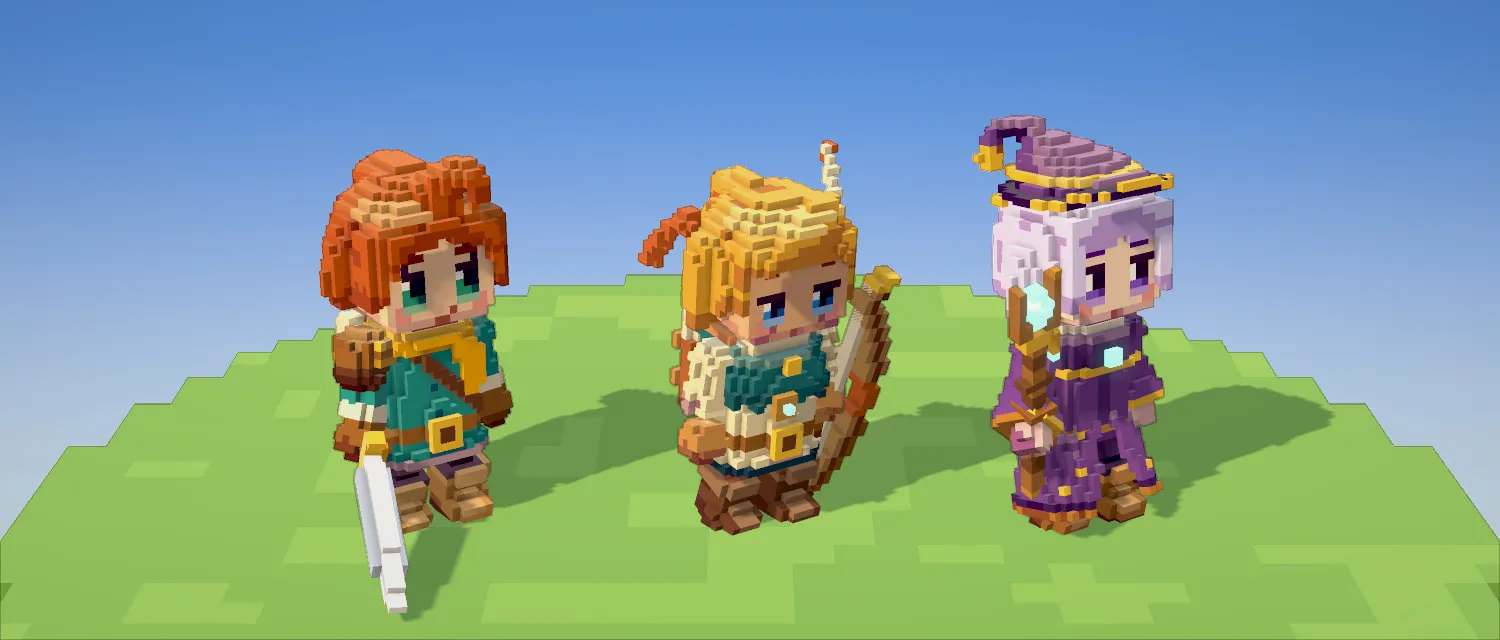
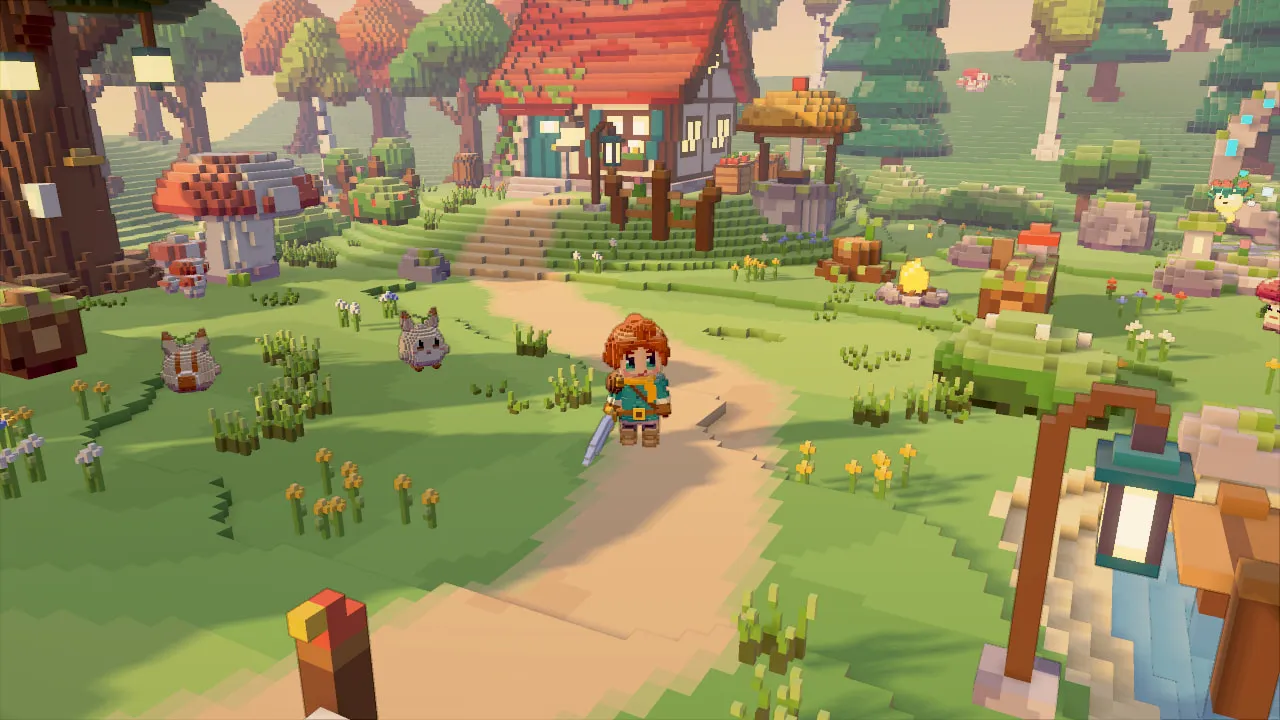
The second round did not pick a winner. It combined them into a fifth direction, E — “Fábula Voxel”: the shapes, warm palette, cottage and painted shading of B; the face, hair and layered equipment of D; the vivid, well-separated colours of A; and the cost discipline of C. Three versions of the adventurer were scored against eight criteria, and the middle one — voxels of 1/40 of a unit, about 2.44 heads tall — won clearly.
The direction comes with a test sentence that is still used when something new is made: if a frame of the game were printed in a children’s adventure book, would it look as if a single person had illustrated it?
The rules that stuck
A few rules from those rounds shape everything you see in Valumo today.
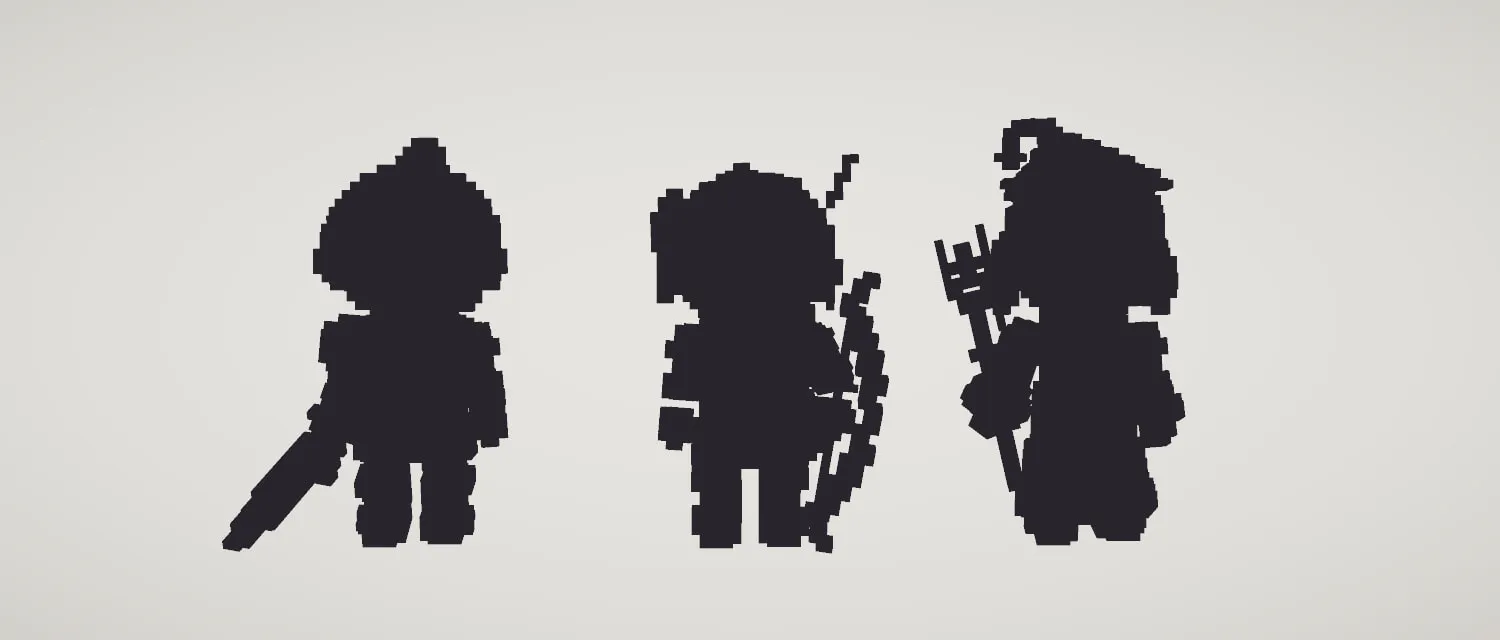
Silhouette before detail. Every hero has to be recognisable as a flat black shape. The adventurer has a hooked quiff and a bedroll; the explorer, a hood worn down and a recurve bow; the mage, a wide hat with a crooked crown and a staff. If a character needs colour to be identified, the silhouette has failed.
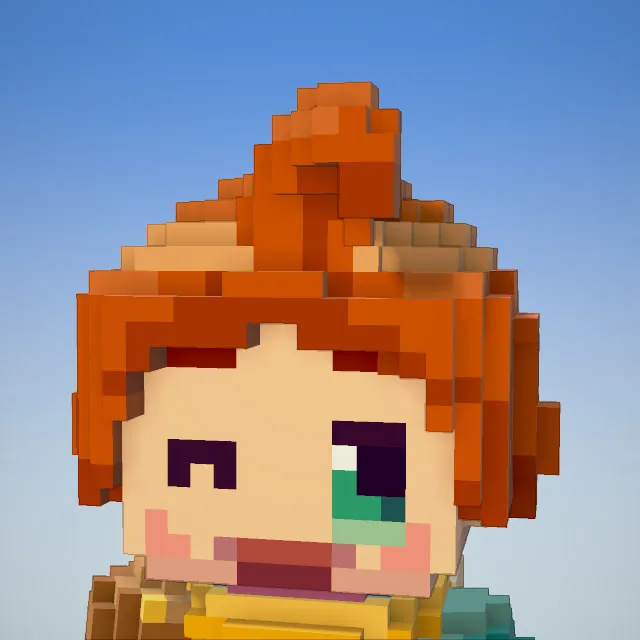
Faces on a flat plate. The features are drawn on a flat front plate: eyes of three by five voxels with a highlight that always sits on the side of the light, eyebrows two voxels above the lashes, and no nose. A one-voxel nose was tried and became noise. Each hero has four expressions — neutral, joyful, determined and surprised — and each acts a little differently.
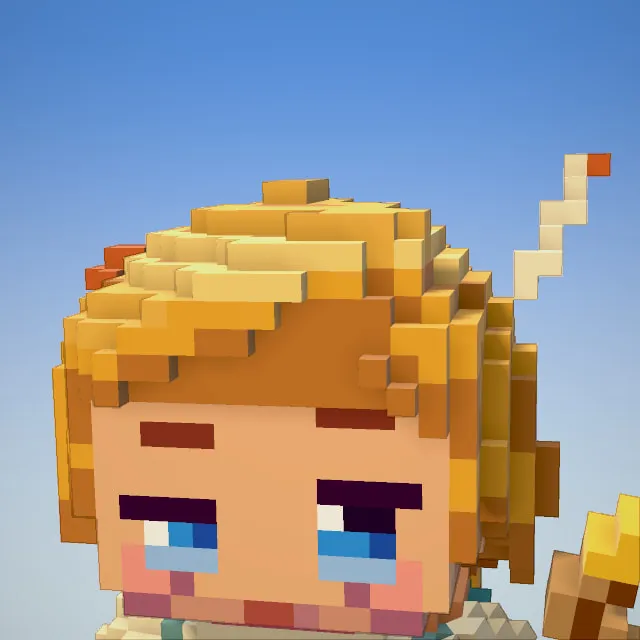
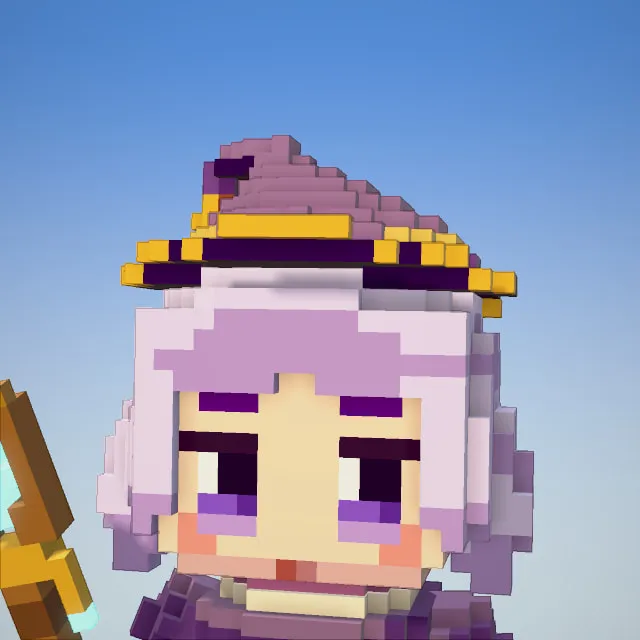
Shadows painted in broad bands. Every material has three or four tones chosen by the direction a surface faces: shadows are pushed towards a wine violet, light towards peach. There is no pure black or pure white in any large area; where black would go, a dark plum is used instead.
Very little light. Glowing materials are reserved for magic and for places where people live — windows, lanterns, crystals. The one recurring motif is the seeds of light: tiny teal capsules, three voxels at most, one per object, and only a handful on screen outside magical places.
Being honest about resemblance
The look was also checked for resemblance to other works. A green pointed hood with a bow reads as a well-known hero archetype, so the explorer’s hood came down, turned teal and terracotta, and gained a headband, a feather and a compass. A tortoise with a tree on its back was too close to a famous creature, so its shell now carries coral fungus, spirals and little glowing capsules instead. The aim is that nothing in Valumo is recognisable from somewhere else.
Weapons, and a written standard
The third round polished hair, hoods, hats, oak crowns, terrain and light. The fourth rebuilt how weapons move: swings follow authored trajectories, and an automatic check flags any frame where a blade passes through a head or a body — a real defect in the very first attack animation. The fifth round fixed the result in 22 reference images, each with the exact camera, light and version used to render it, so any new asset can be compared against them under the same conditions.
What is still open
The three heroes are frozen, but much of the cast is not. Several villagers and some creatures are still candidates awaiting final approval, and the long blade is not playable yet. The look is settled; the people who live in it are still arriving.