Development journal
Field notes from the making of Valumo
Every milestone, written up with captures from the game. The timeline below starts with the art rounds that came before anything was playable and runs to the latest version, v0.8.
Start here · Field note 01
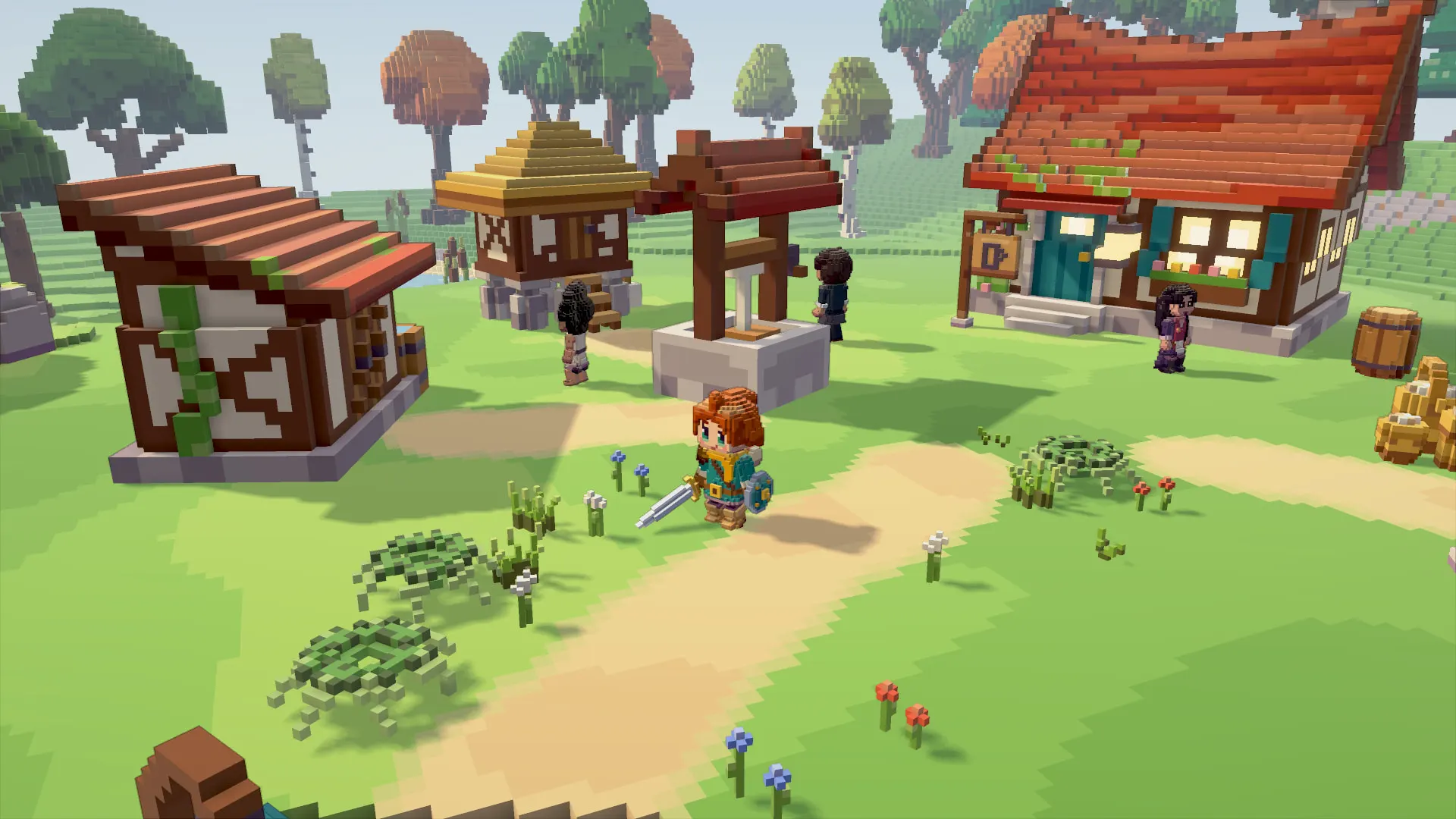
Meet Valumo: a small adventurer in a big world
What Valumo is, what you can already do in it, what it does not have yet, and how the pictures in this journal are made.
All field notes
- Note 05
Making rewards feel real
A backpack that opens over the running game, items you can see as voxel models, and spores that fall where a fungus was defeated — and stay there after you save.
- Note 04
Giving each world its own identity
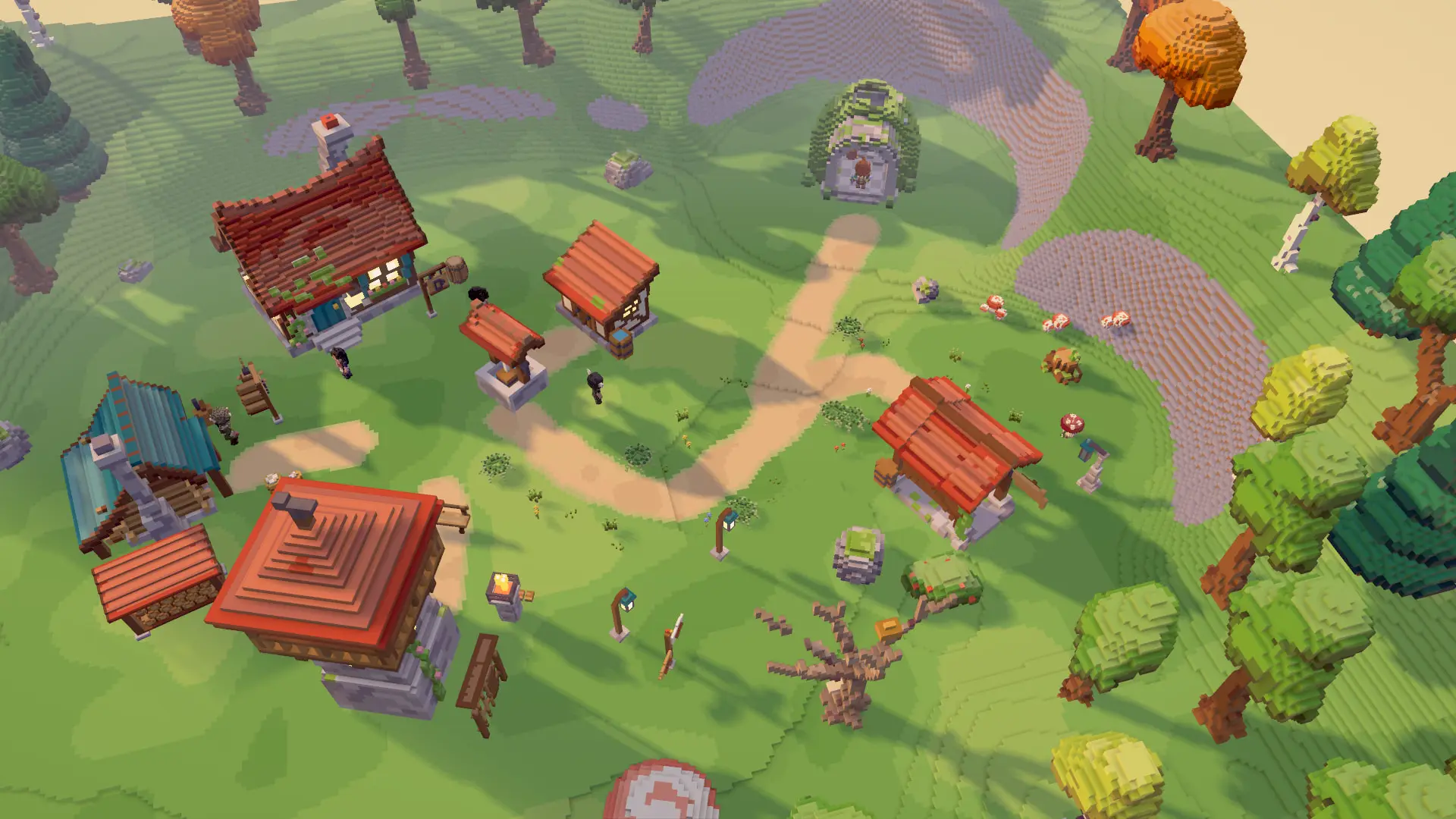
From one hand-made village to regions generated from a seed: villages with workshops, ruins with something inside, and worlds that never change under your feet.
- Note 03
From a village to an adventure
How Valumo went from a hero walking around a village to a first fight, music, and a complete quest with a journal, saving and Continue.
- Note 02
Finding Valumo’s look
Four art directions, one adventurer, and the rules that became “Fábula Voxel”: proportions, flat faces, painted shadows and very few lights.
The trail so far
Three parts so far: finding the look, the first playable builds, then worlds and rewards. Each version is a finished, playable build of the game; work in progress is not listed.
Part I · Finding the look
Art rounds, before anything was playable.
- Art rounds
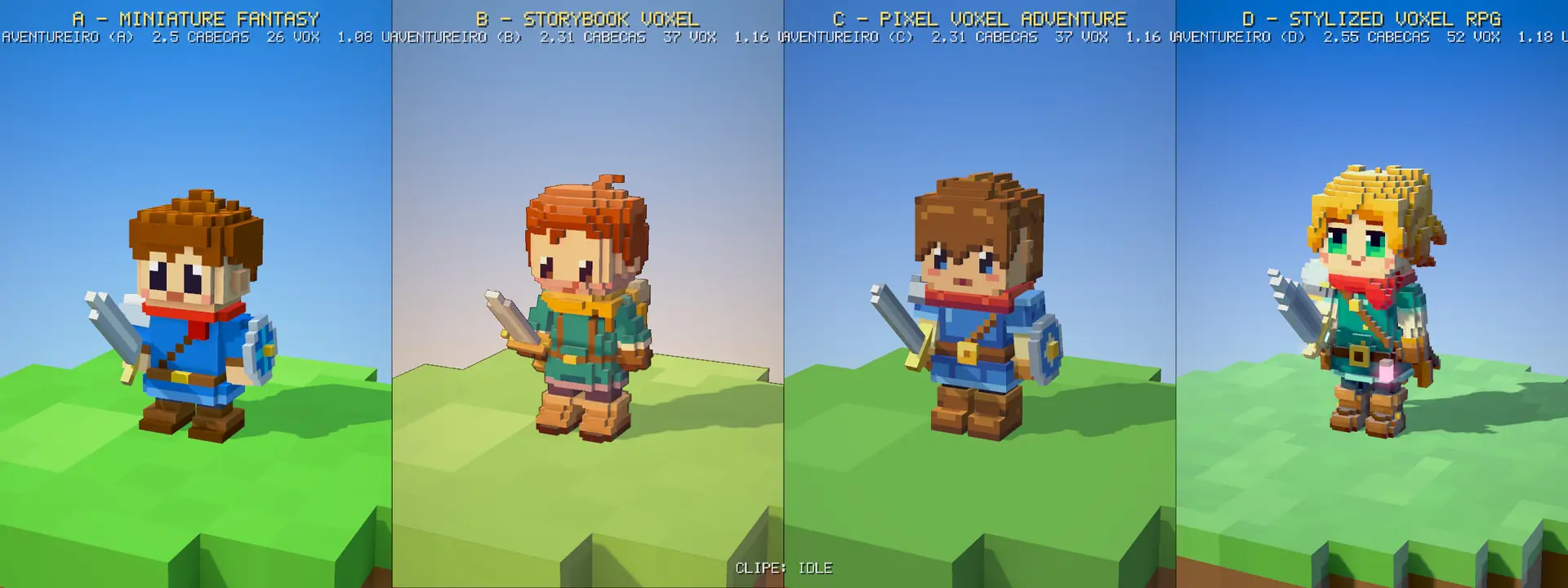
Four directions, one look
The same heroes, creatures and clearing were built in four art directions and compared in one viewer. The fifth, "Fábula Voxel", took its shapes and light from the storybook direction and its character detail from the finest one.
- Directions A–D compared from the same seven camera angles
- Heroes settled at about 2.4–2.5 heads tall
- Direction E, "Fábula Voxel", chosen as the official look
Read: Finding Valumo’s look
- Art rounds
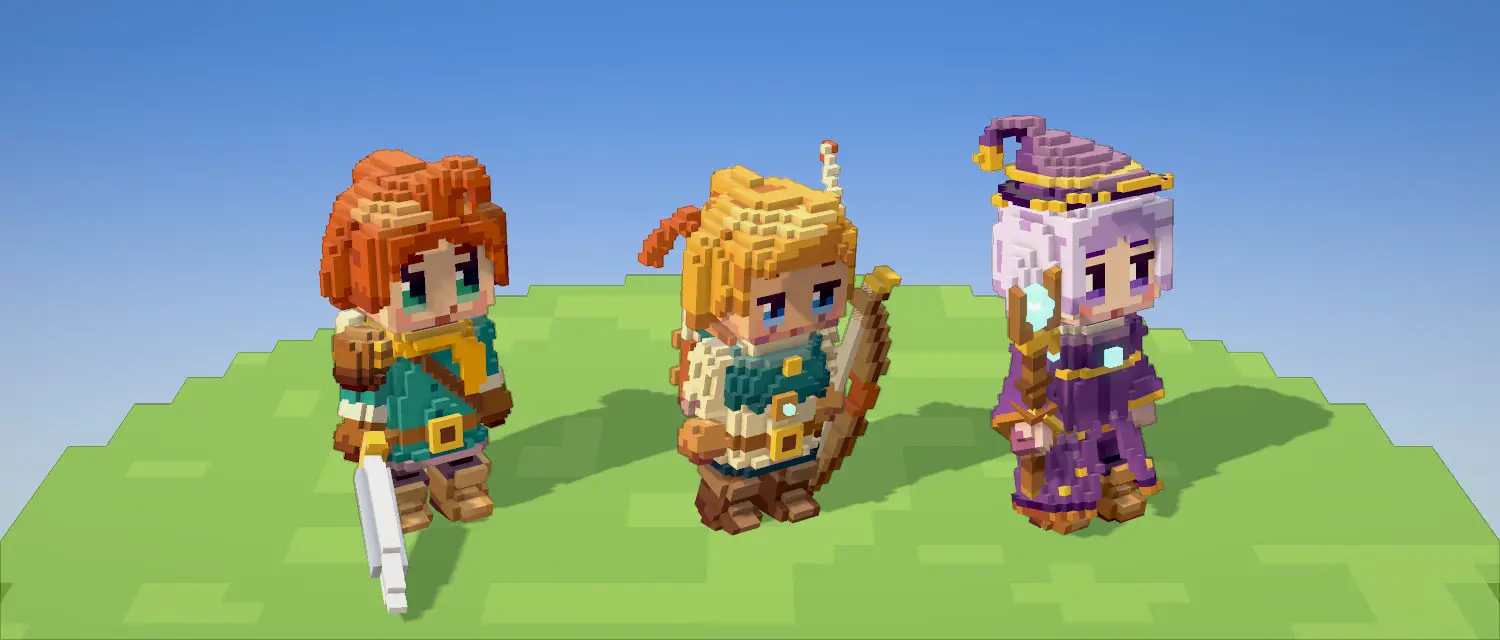
Polish, weapons and a written standard
Hair, hoods, hats, oak crowns, terrain and light were polished; weapon swings were rebuilt as authored trajectories with automatic checks; the result was fixed in 22 reference images.
- Approved hair, hood, hat, oak and tortoise-shell designs
- "Seeds of light": tiny teal lights, used sparingly
- Sword, bow and staff animated along checked trajectories
- 22 canonical reference images
Read: Finding Valumo’s look
- Art rounds
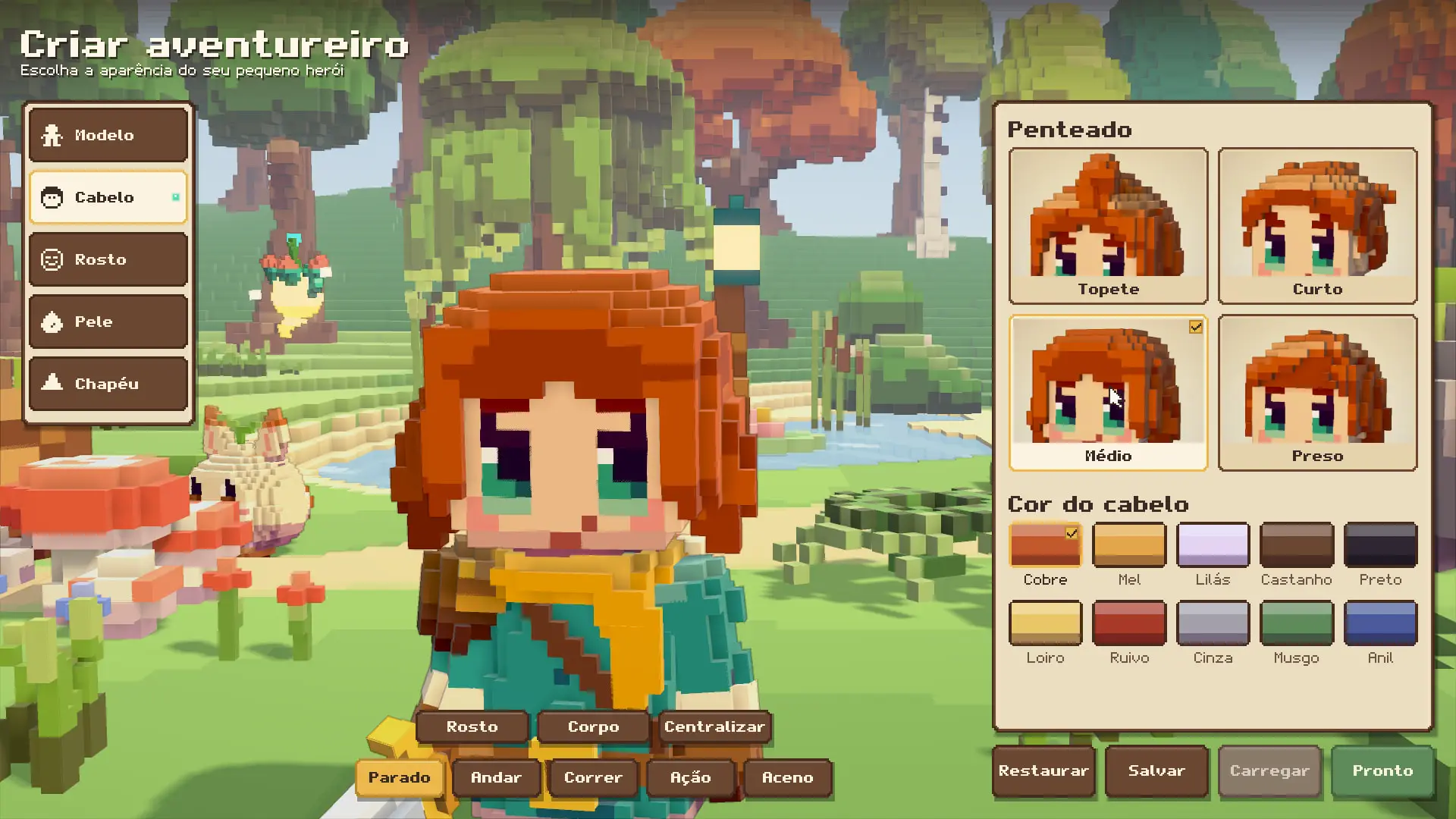
Villagers and a character creator
The first villagers and creatures joined the clearing, and hero customisation moved into the game's runtime with a mouse-driven character creator.
- Village NPCs, including Kelyra the innkeeper
- Hairstyles, colours, skin tones, faces and hats
- The three heroes kept as presets identical to the originals
Part II · From a village to an adventure
The first playable builds, combat, sound and a complete quest.
- v0.1
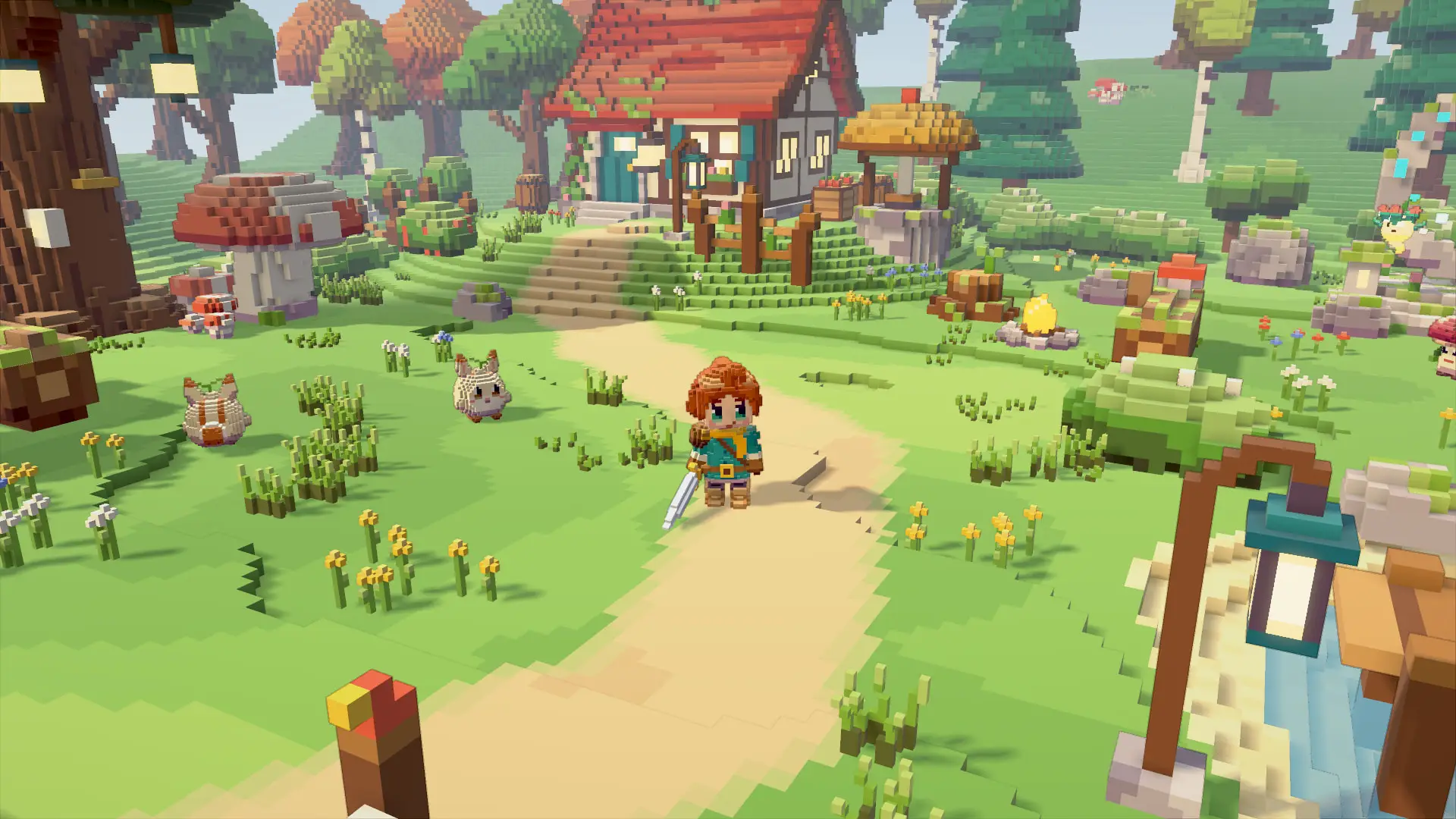
First playable exploration
A controllable hero in the village: walk and run with acceleration, climb steps and slopes, collide with the scenery, follow a third-person camera that stays out of walls, and talk to Kelyra.
- Movement that behaves the same from 17 to 240 FPS
- Feet planted on the real terrain
- Appearance chosen or created before playing
- v0.2
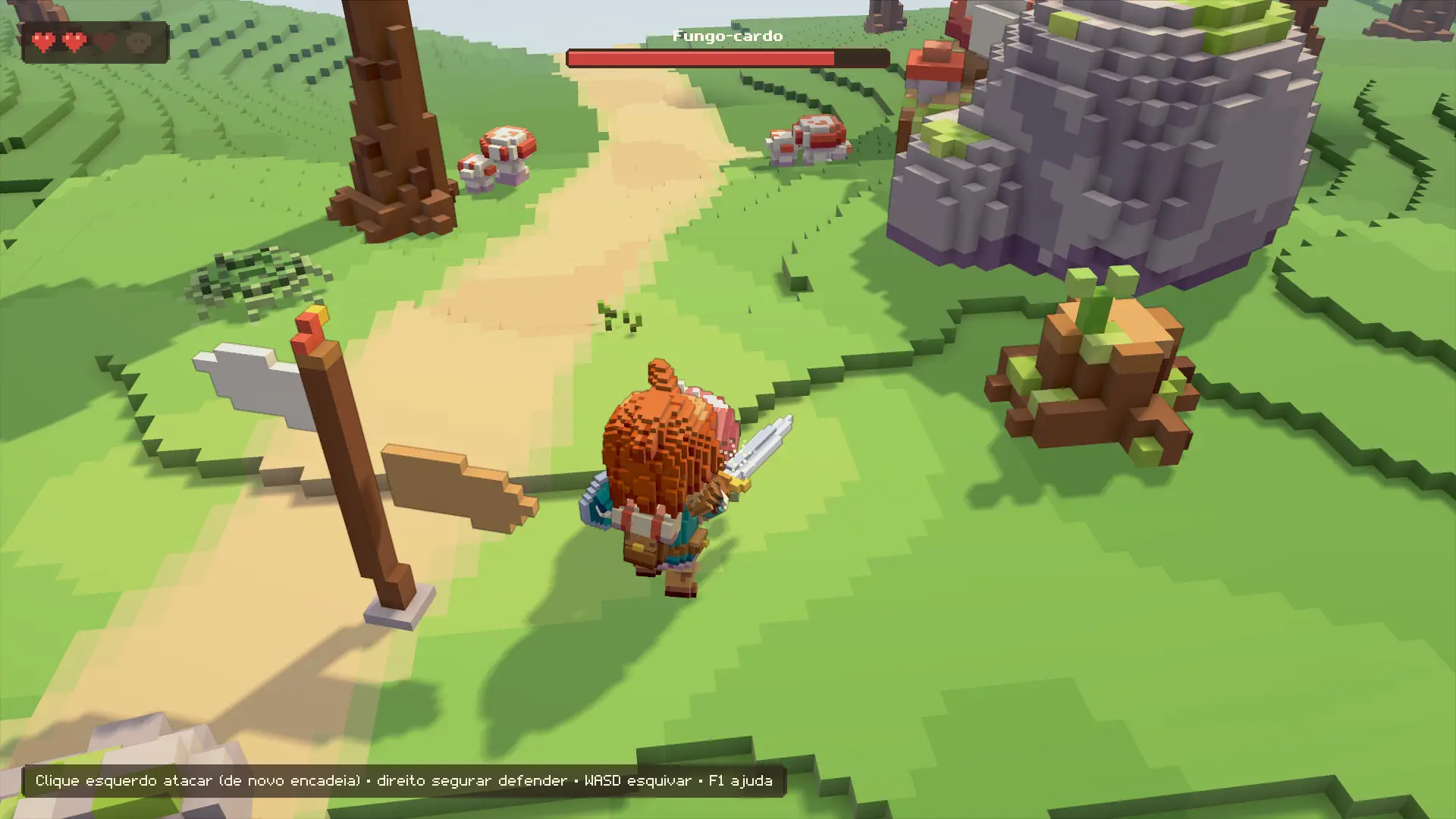
Sword, shield and the first fight
Real-time combat in an arena south of the village: attack while walking, block with the shield, dodge, jump, lock on and switch targets, against one fungus, three, or a boss prototype with two smaller ones.
- Chained horizontal, diagonal and downward swings
- Directional dodge and a jump that climbs crates
- Defeated enemies break apart voxel by voxel
- Round
Music, sound and five craftspeople
Original music, ambience and sound effects, with the scores and the synthesis kept in the project itself; more hair, eye and boot options; and five villagers with a craft and lines of their own. Part of v0.3.
- Two music themes approved
- Footsteps, interface and ambience sounds
- Bramor, Teodor, Pluma, Ondina and Lunara
Part of v0.3. Read: From a village to an adventure
- v0.3
Engineering clean-up
A quality pass before adding more game: checks that fail when they cannot verify something, saves that survive corrupted files, long sessions without leaks, the interface tested at seven resolutions, and continuous integration.
- Reference images re-rendered and compared pixel by pixel
- Interface checked at seven resolutions
- Automated build and tests on the main branch
- v0.4
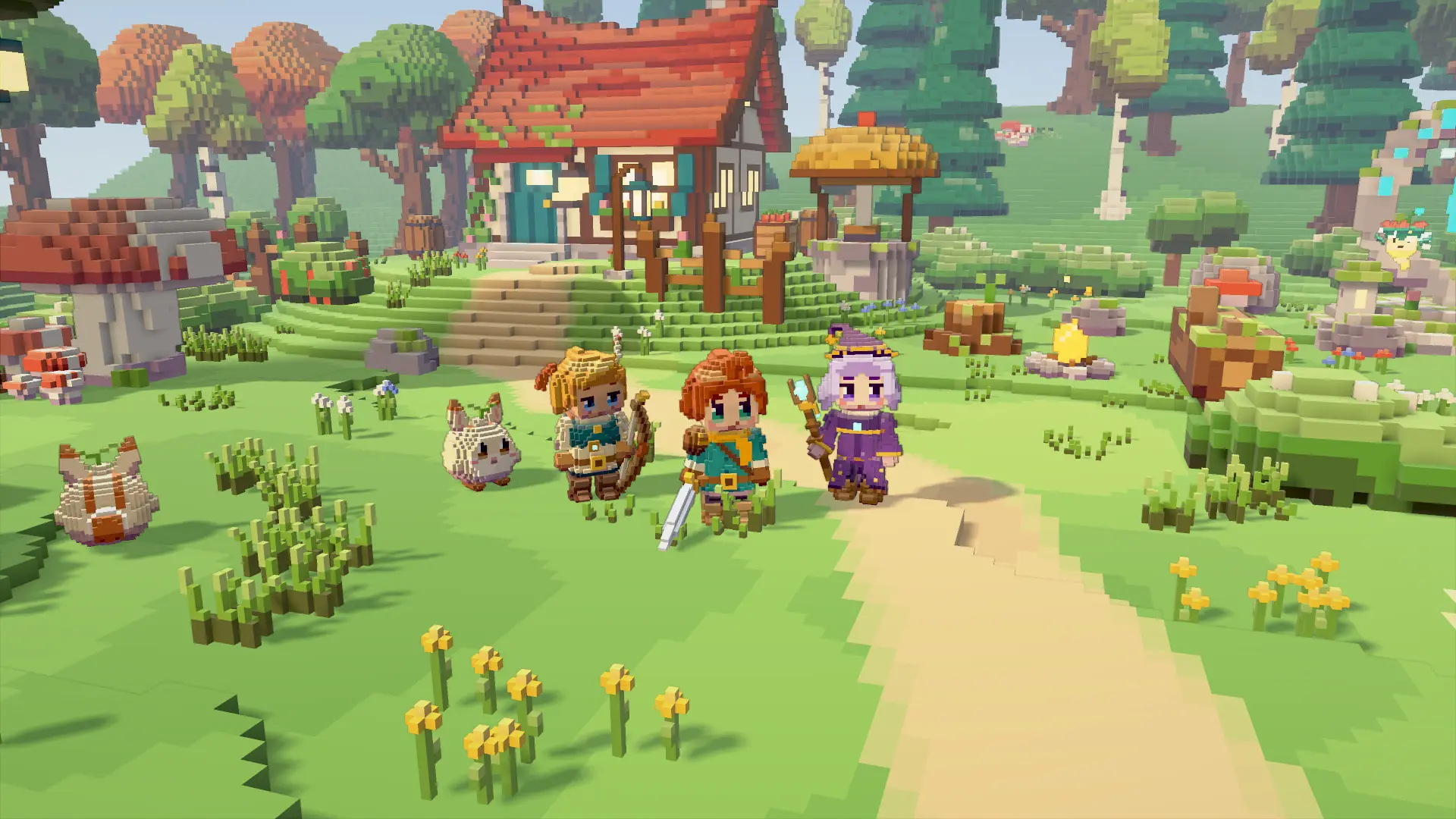
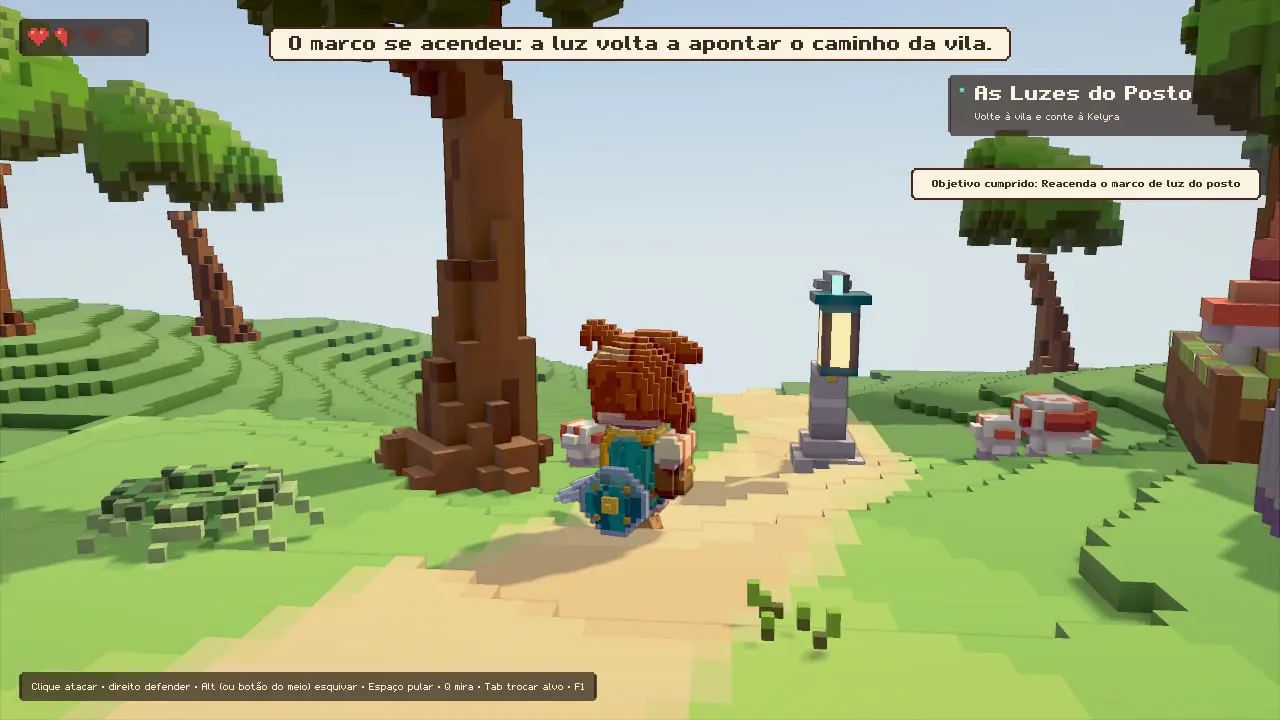
The first adventure
"As Luzes do Posto": accept Kelyra's request, clear the fungi from the south trail, relight the beacon at the trail post and come back for the reward — with a journal, a quest tracker, saving and Continue.
- Kelyra reacts to ten different situations
- A beacon that lights up and stays lit
- Saved games written safely, then continued
Part III · Worlds and rewards
Generated regions, an inventory and loot that stays in the world.
- v0.5
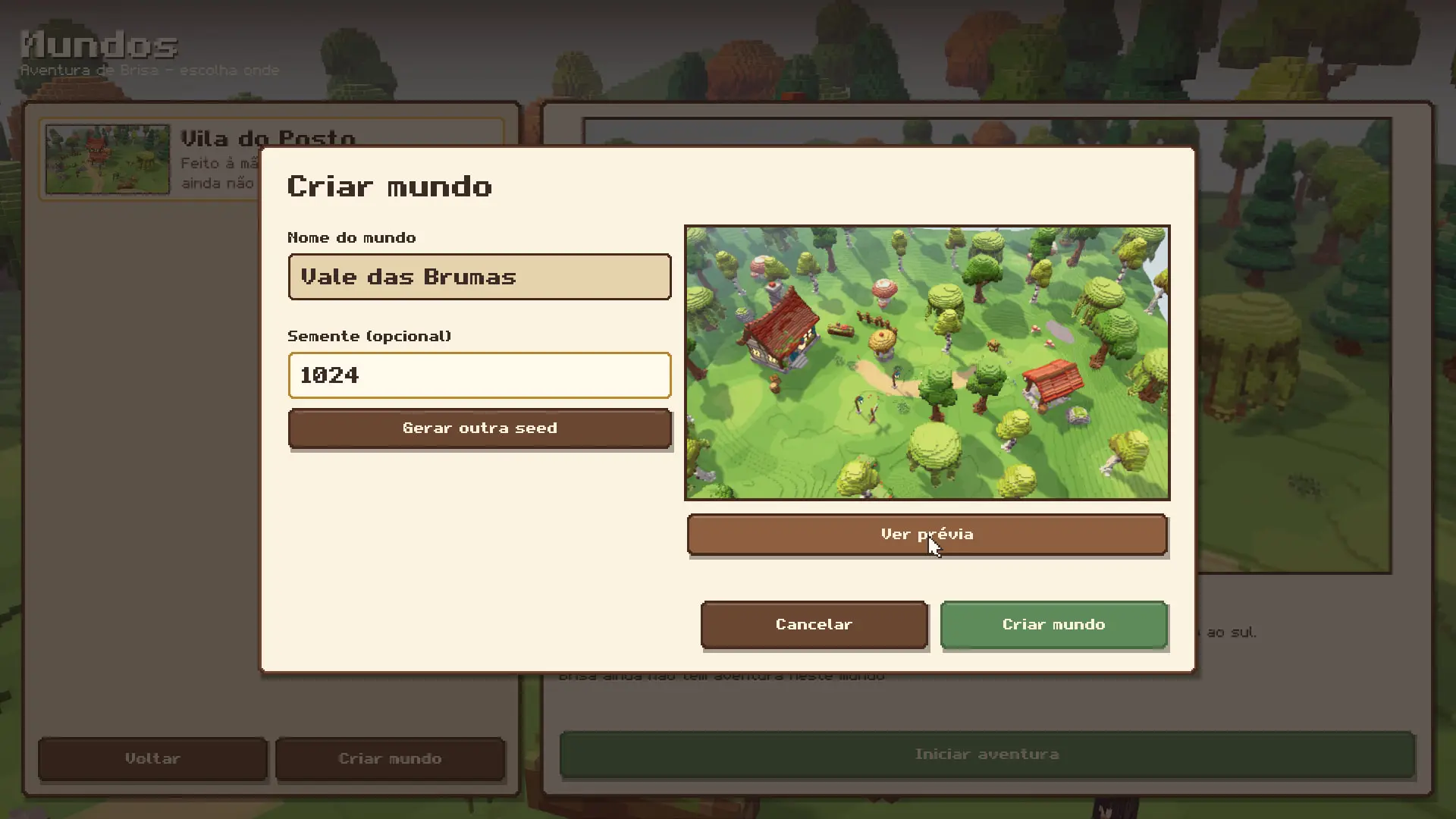
Generated regions and a front door
A region generated from a seed — settlement, trail, post and encounter — with the same adventure tied to the generated place. Plus a title screen, saved characters and worlds created from the menu with a real preview.
- Name a world, pick or roll a seed, preview it
- Each character keeps an adventure per world
- Older saved games adopted automatically
- v0.6
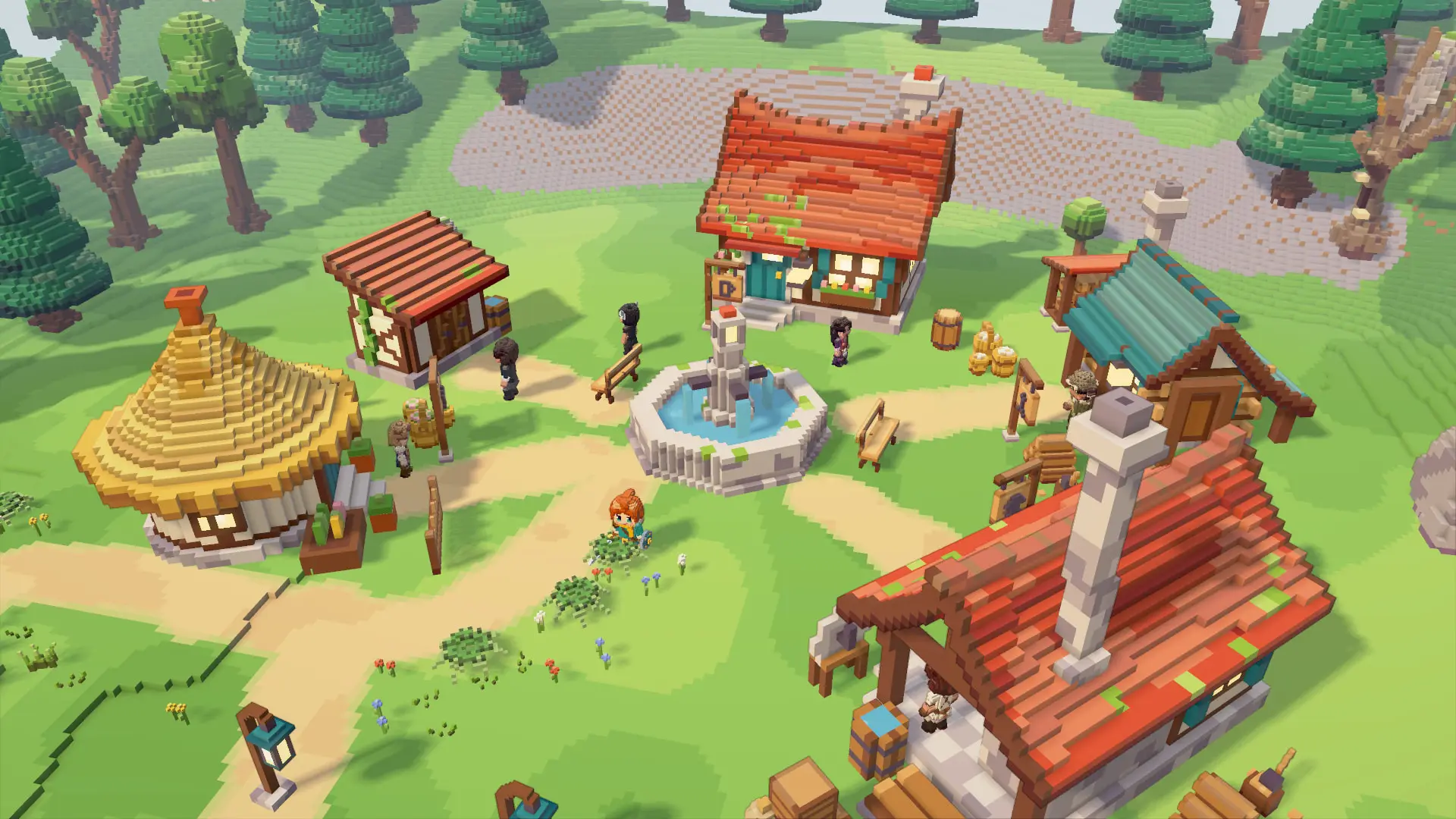
Worlds with an identity
Generator v2 builds path villages and rural villages with whole craft workshops, places a ruin outside the village with its own trail, and hides a discovery in each ruin. A world keeps the generator version it was born with, forever.
- Fountain squares, shops, forges, farms and hunters' cabins
- Four ruins: house, fallen tower, buried vault, abandoned farmstead
- Walk into workshops and ruins
- v0.7
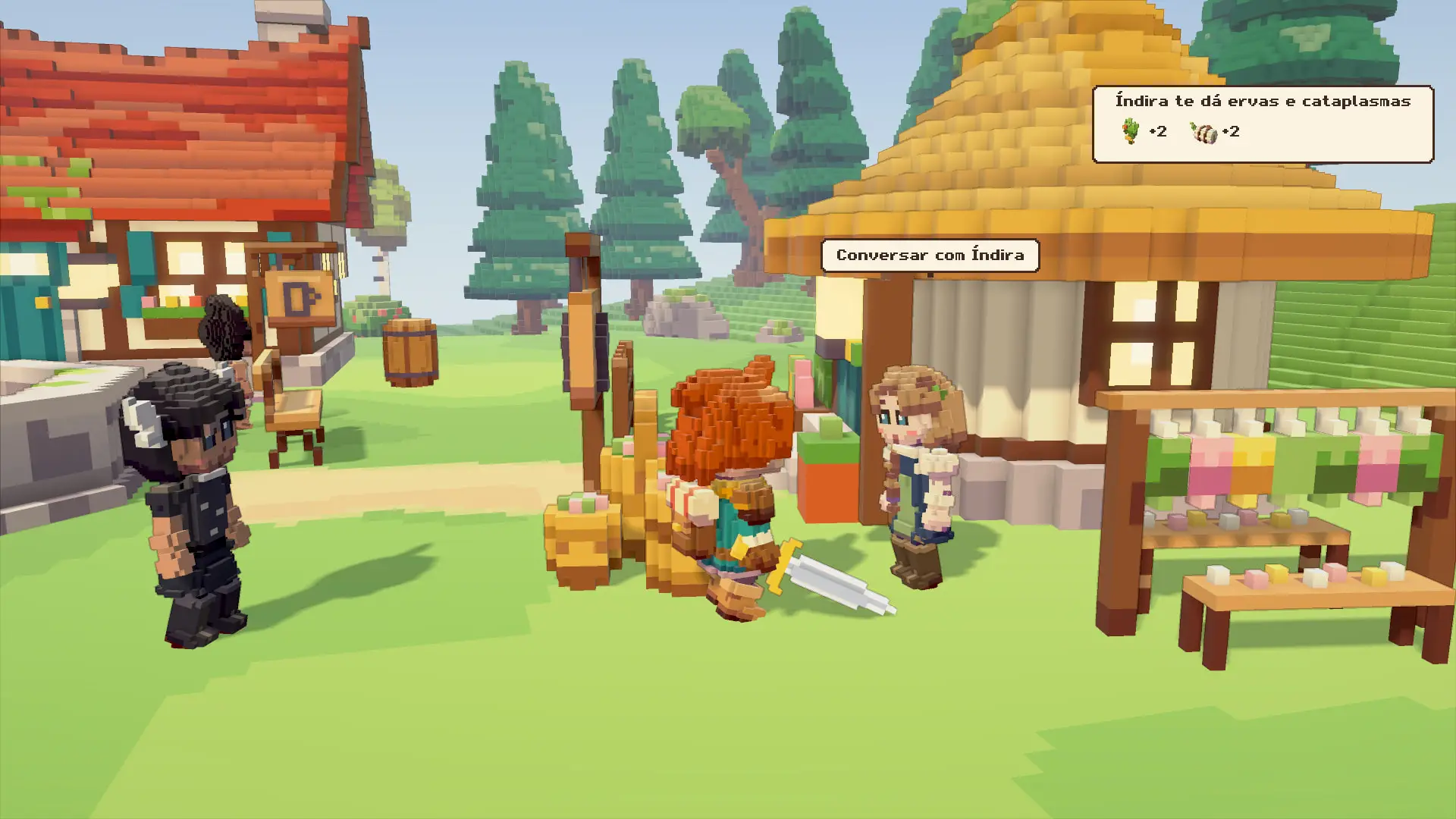
A backpack that stays open
The first RPG progression: a backpack that opens over the running game, five items shown as voxel models, gifts and finds that are given once, and a poultice that restores a heart.
- Herbs, poultice, stone fragment, aged wood, travel record
- Índira's gift and the finds in ruins
- Everything survives saving and continuing
Read: Making rewards feel real
- v0.8
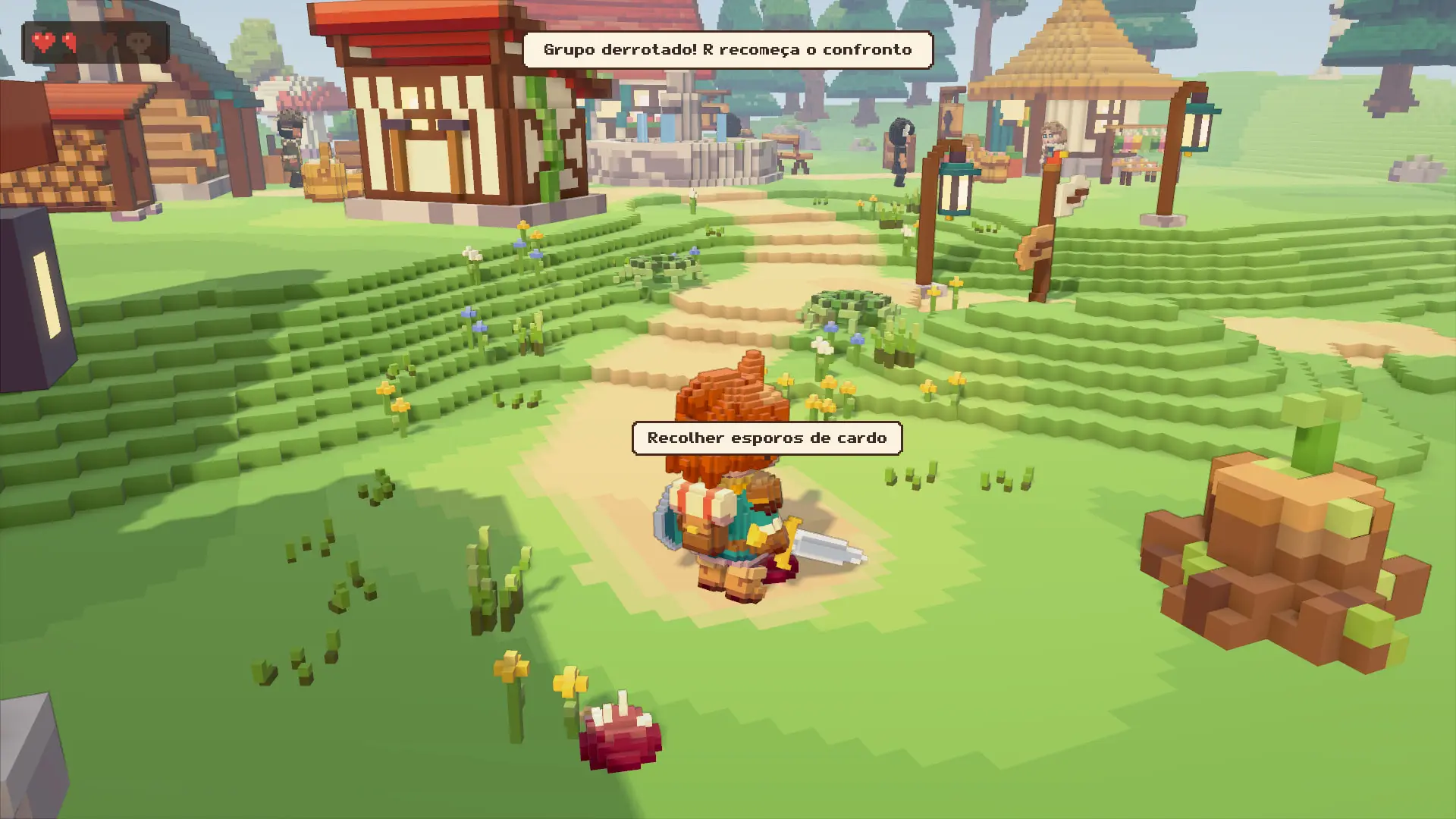
Physical loot
Defeated fungi drop spores on the ground near where they fell. Walk up, pick them up, and find what you left behind in the same place after saving. Each fungus drops once per adventure.
- Same voxel model on the ground and in the backpack
- Drops persist across save and continue
- World generation unchanged: old seeds give the same worlds
Read: Making rewards feel realRead: Meet Valumo: a small adventurer in a big world
Next: work in progress. It will appear here when it is finished.