Devlog Field note 05
Making rewards feel real
A backpack that opens over the running game, items you can see as voxel models, and spores that fall where a fungus was defeated — and stay there after you save.
- Published
- Topic
- Systems
Retrospective Written on 23 November 2026 about milestones finished before this journal existed.
Up to v0.6, the only thing you took home from an adventure was coins. The last two versions gave Valumo its first RPG progression: things you can carry, use and leave behind. They were built in a deliberate order — first a place to keep things, then a reason for things to appear in the world.
v0.7 — a backpack that stays open
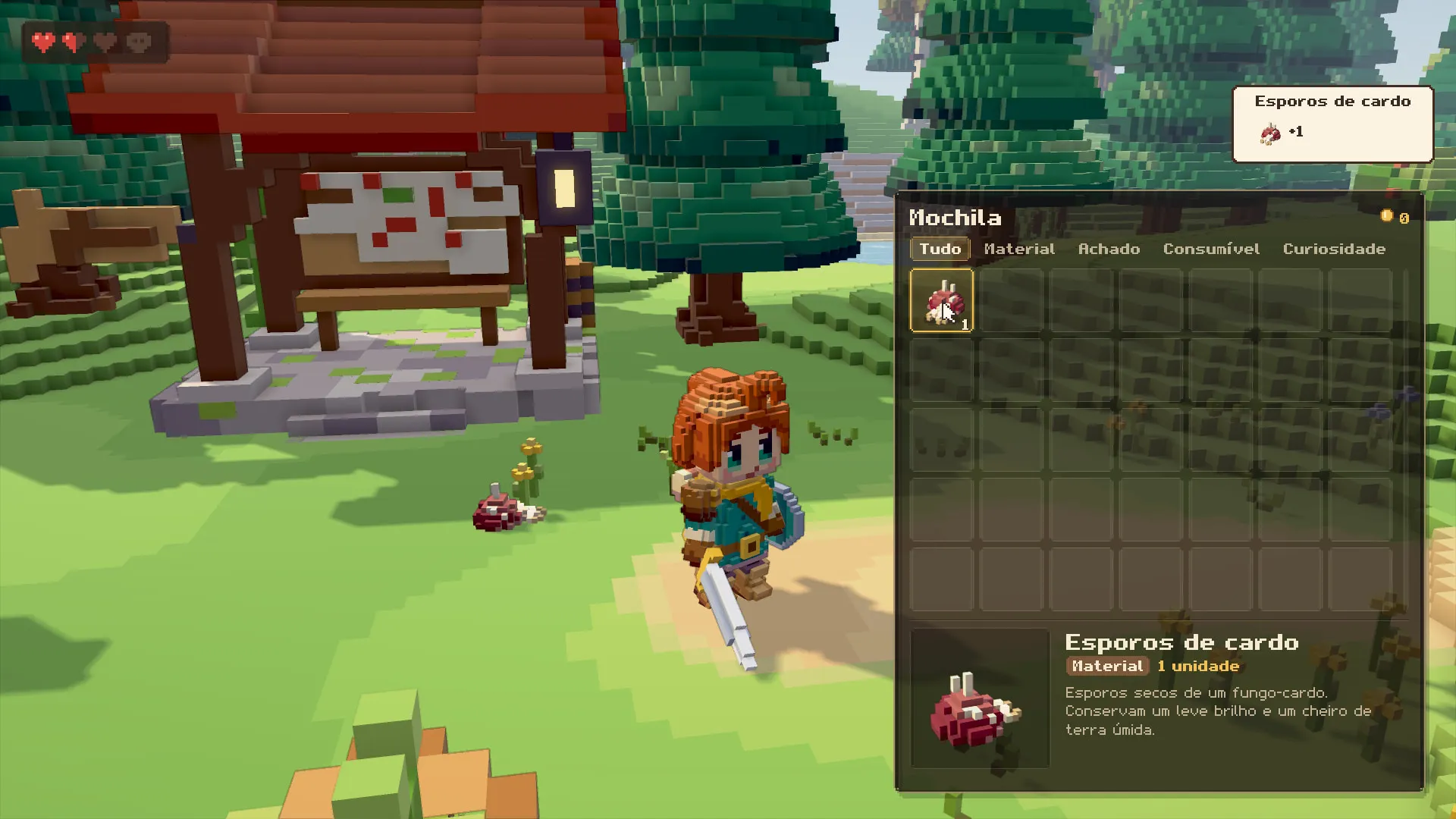
The backpack opens with a key, or from the pause menu, as a translucent panel over the game, which keeps running. You can keep walking with it open. There is no slot limit: the grid scrolls, and tabs sort what you carry by category. The selection follows the mouse, and every item is shown as its own small voxel model, with the selected one turning slowly in the detail panel.
That is the second version of the backpack. The first one was an opaque panel in the middle of a darkened screen that paused the game. It was turned down after a hands-on test and rebuilt before v0.7: translucent, on one side of the screen, with the world and the hero still visible and moving behind it, and with items that are easier to recognise.
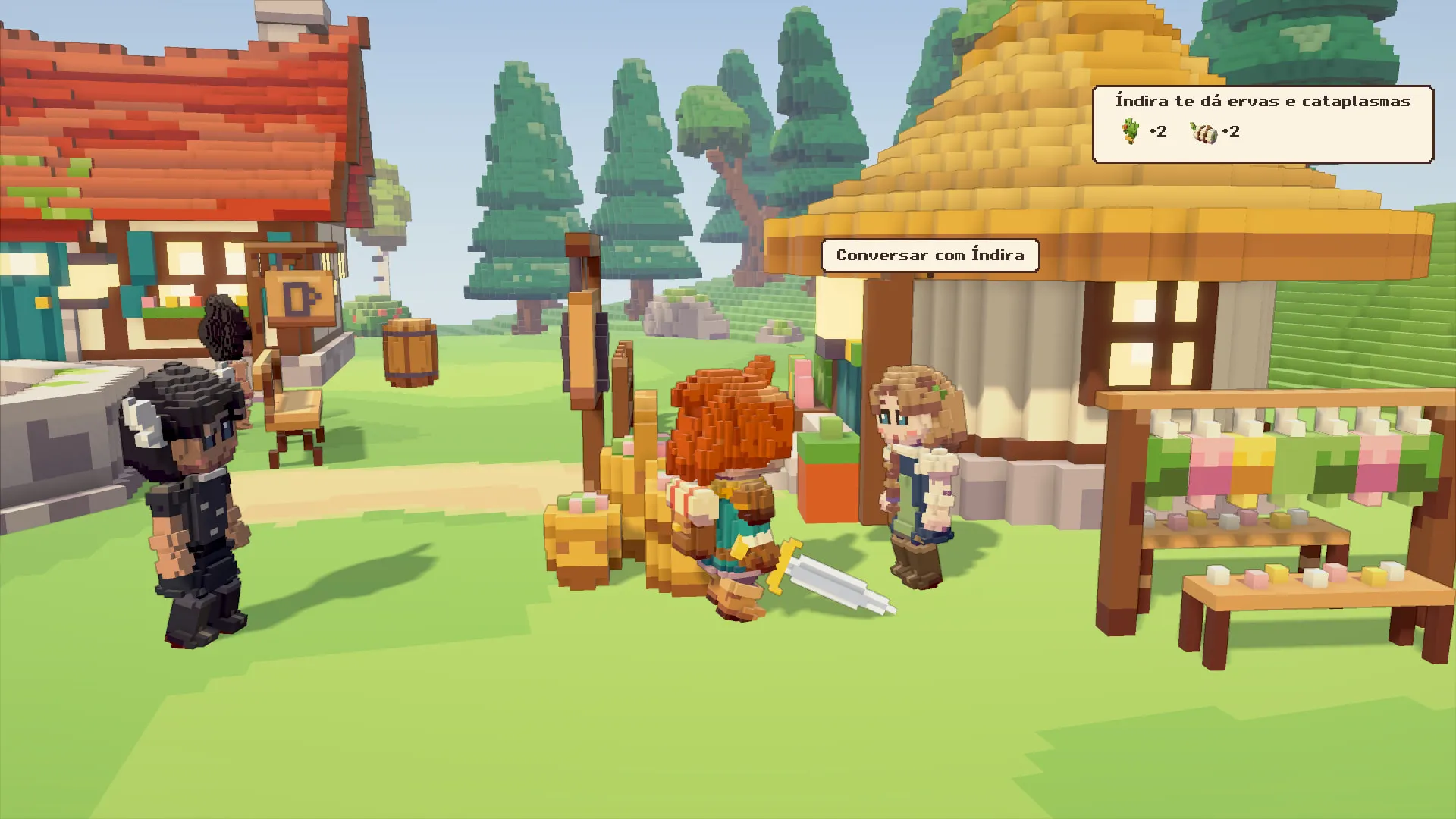
Five items arrived with it: herbs, a poultice, a fragment of old stone, a piece of aged wood and a travel record. They come from two kinds of sources. Índira, the herbalist, gives you herbs and poultices at the end of a conversation. The ruins and the old tree hand over their finds along with each discovery. Every source gives exactly once, and gives everything or nothing — you cannot end up with half a gift because something went wrong in between. The poultice is the first item with a use: outside a fight, it restores one heart.
v0.8 — loot you can see
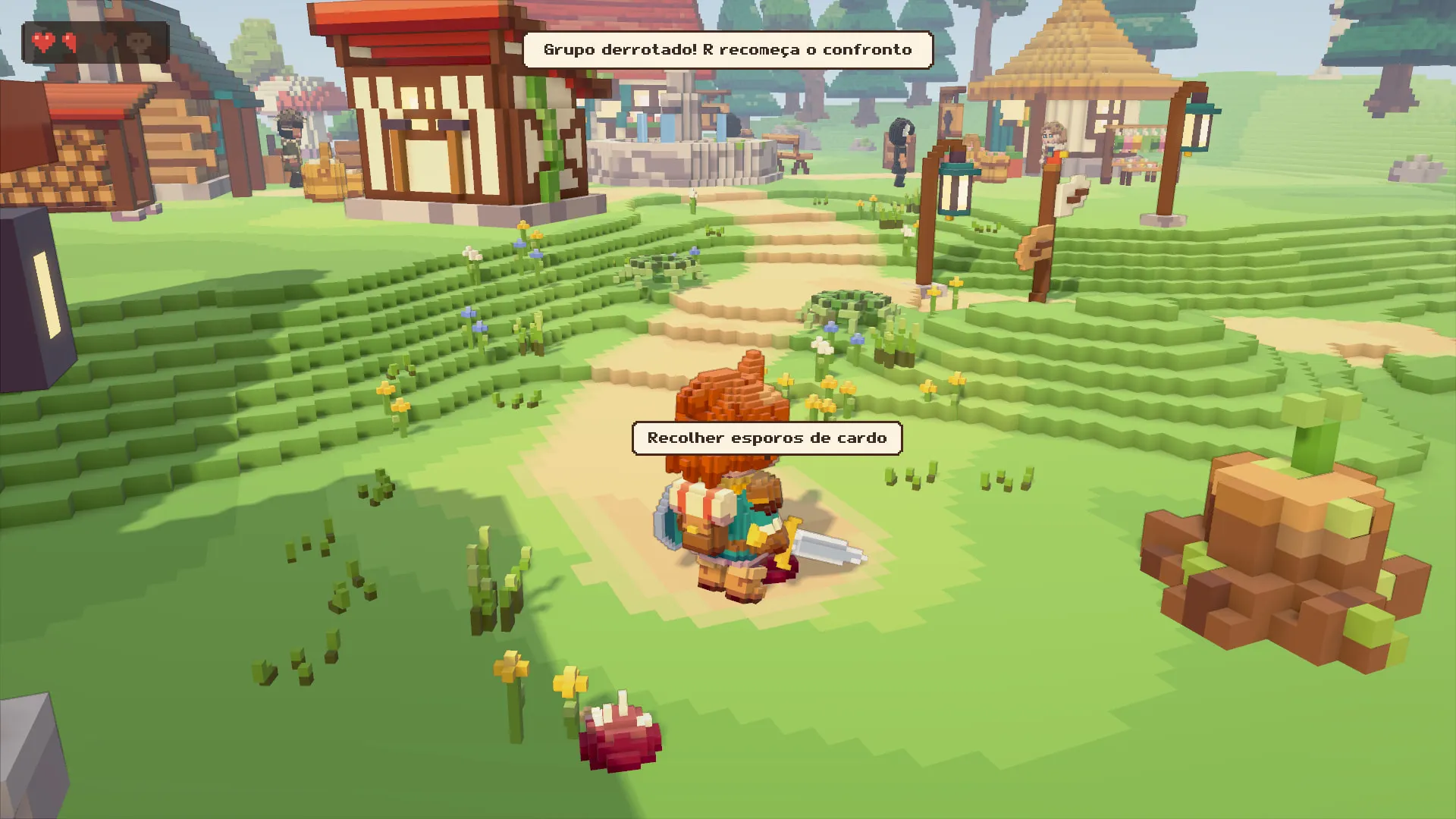
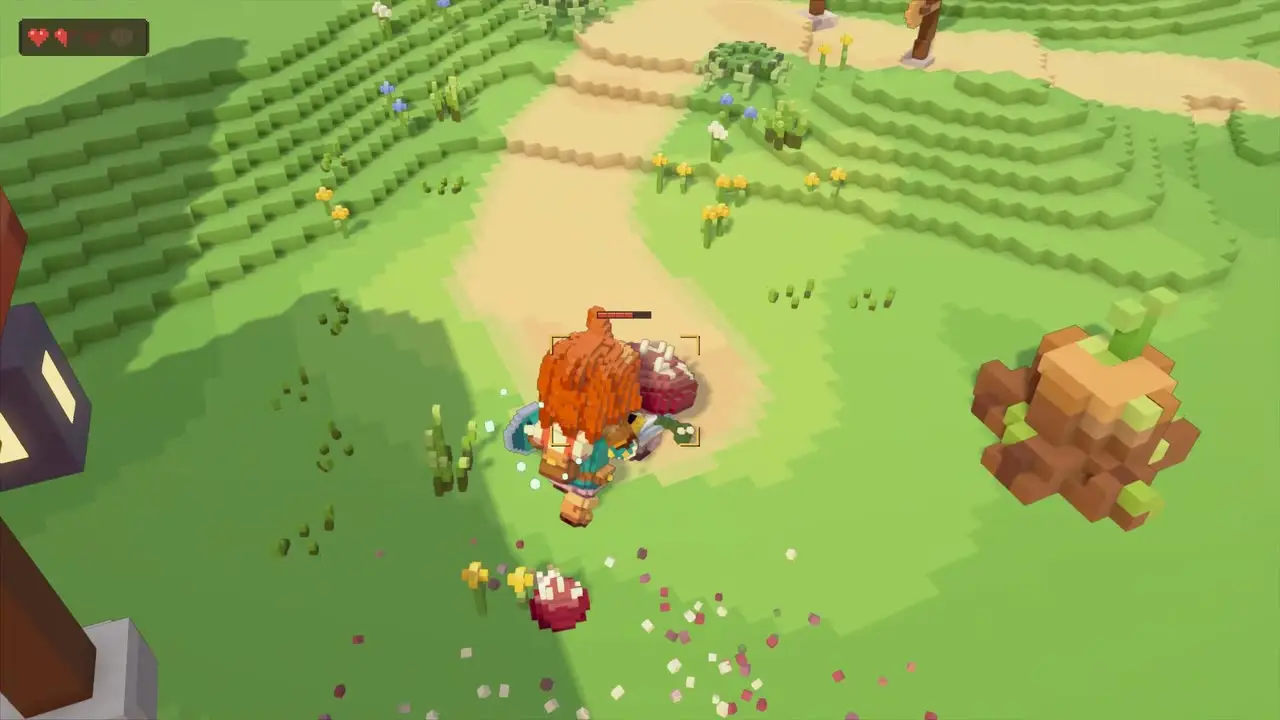
The fungo-cardo now leaves something behind: spores, which fall to the ground near where it was defeated. It works at the Vila do Posto — in the arena and on Kelyra’s trail — and at the trail post of every generated region. Walk up and press the same key you use to talk to people, and the spores go into the backpack.
The spores are drawn as a cracked piece of the fungus’s crimson cap, with pale spores and a few faint points of light. They were picked from five studies, and the same model is used on the ground and in the backpack, so what you pick up is visibly what you carry.
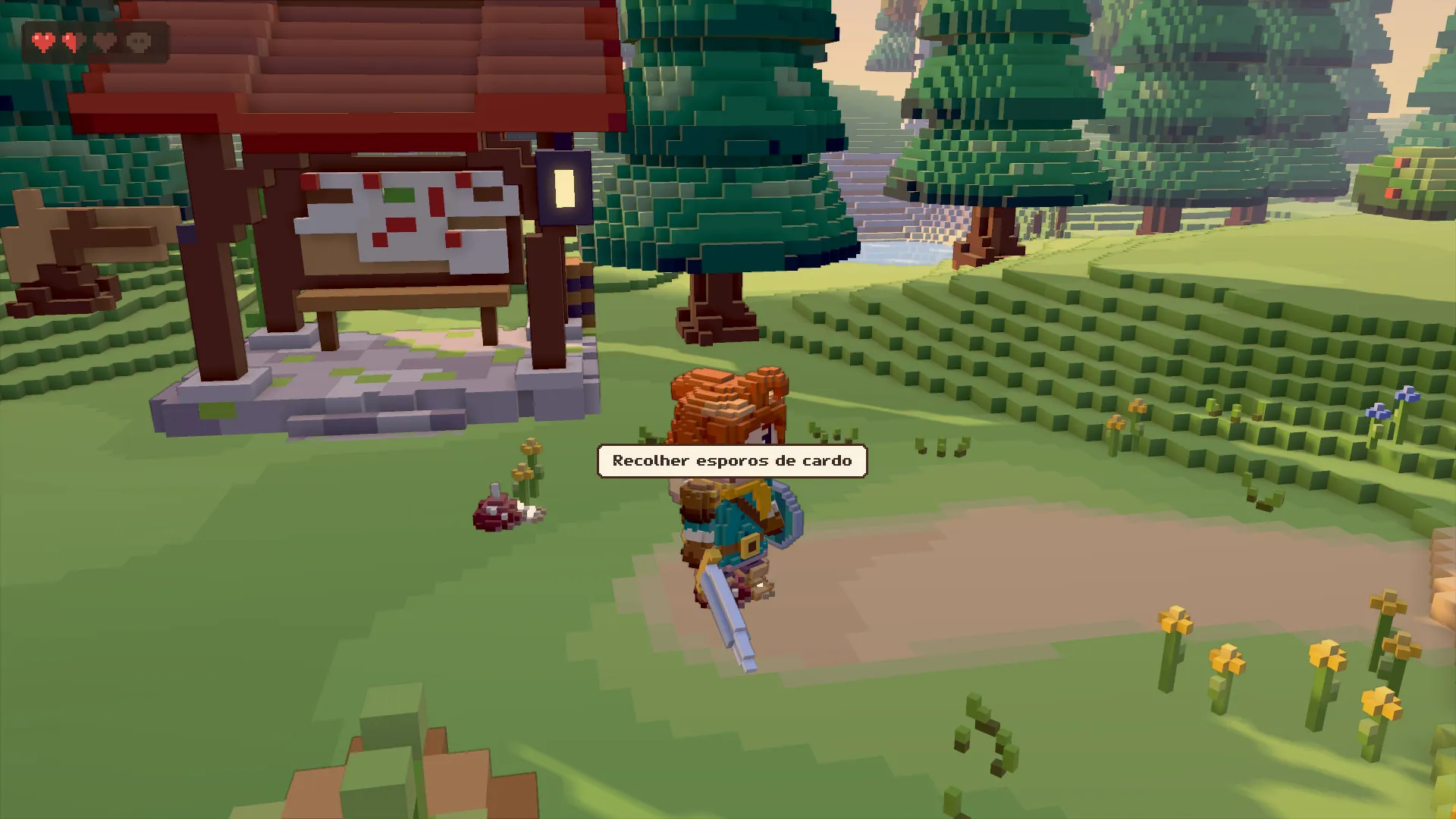
A drop appears while the fungus is falling apart, takes a short fall and a small bounce, and lands somewhere you can actually reach: on walkable ground, at the same level, with room for the hero and no wall in the way, and away from other drops when possible. If there is no good spot, it lands at your feet.
What stays where you left it
The part that took the most care is the part you only notice when it goes wrong. If you defeat a fungus, leave the spores on the ground, save and quit, the spores will be in the same place when you continue. If you pick them up, they stay picked up. Each fungus drops once per adventure: fighting the same encounter again does not create a second pile.
That works because every drop belongs to a specific enemy, identified by a stable key for its place in the encounter — never by where it died, when it died, or a random roll. The same identity is used by the quest, so the fungi that count for Kelyra’s trail are the same ones that drop spores. Old saves open untouched, and the world generation did not change at all: the seeds you already know still give the same worlds.
What is still missing
The spores have no use yet. Your health is not part of the save, so it comes back full when you continue. The item models are first versions, and the fungo-cardo is still the only enemy that drops anything. Those are the obvious next steps for rewards, and the next field note will say which of them actually landed.