Devlog Field note 04
Giving each world its own identity
From one hand-made village to regions generated from a seed: villages with workshops, ruins with something inside, and worlds that never change under your feet.
- Published
- Topic
- Worlds
Retrospective Written on 23 November 2026 about milestones finished before this journal existed.
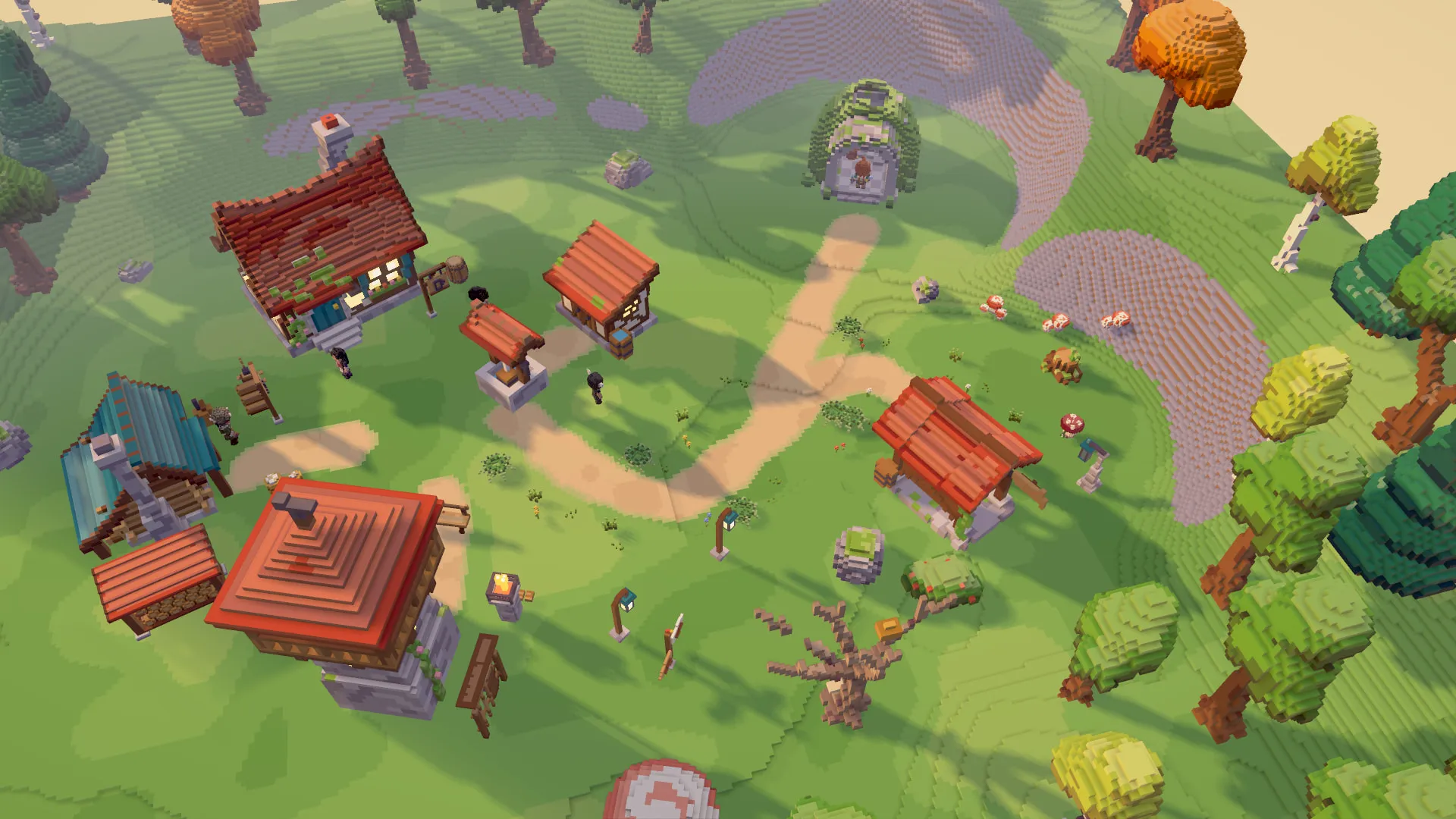
The first adventure took place in a village that was placed by hand: the Vila do Posto. It is still in the game. But a world that is always the same village runs out of surprises quickly, so the next two milestones taught Valumo to build places on its own — and to keep each of them for good.
v0.5 — a region from a seed
The first generator turned a number, the seed, into a region: a settlement, a trail leaving it, a post at the end of the trail and an encounter on the way. The same adventure from v0.4 was then tied to the generated place: a villager asks for help, the fungi sit on the generated trail, and the beacon stands at the generated post. Same story, different geography.
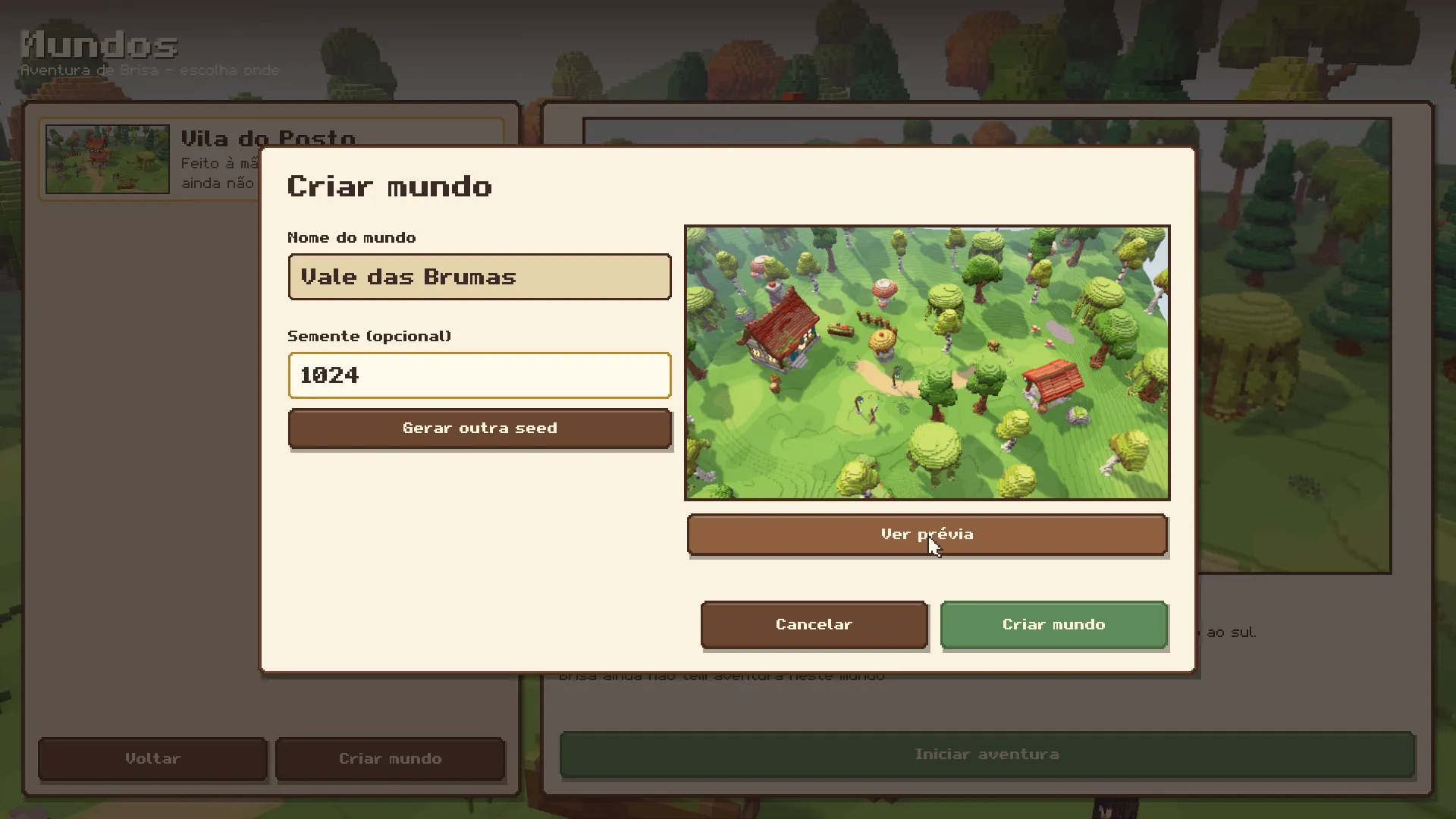
That needed a front door. v0.5 also added a title screen with the village behind the menu, a list of saved characters, and a way to create worlds from the menu: give the world a name, type a seed or leave it empty to roll one, and press preview to see a picture rendered from the actual region before you commit. Each character keeps a separate adventure in each world, and a game saved by an older version is picked up automatically as one of those adventures.
A library of places
Between v0.5 and v0.6, a library of 35 models arrived: houses, trees, ruins, structures and props, plus complete sets for crafts such as a forge or a market stall. Each one is catalogued with its measurements, its entry points and whether it is approved. The game only loads what the current scene uses, so a bigger library does not make every region heavier.
v0.6 — villages with a trade
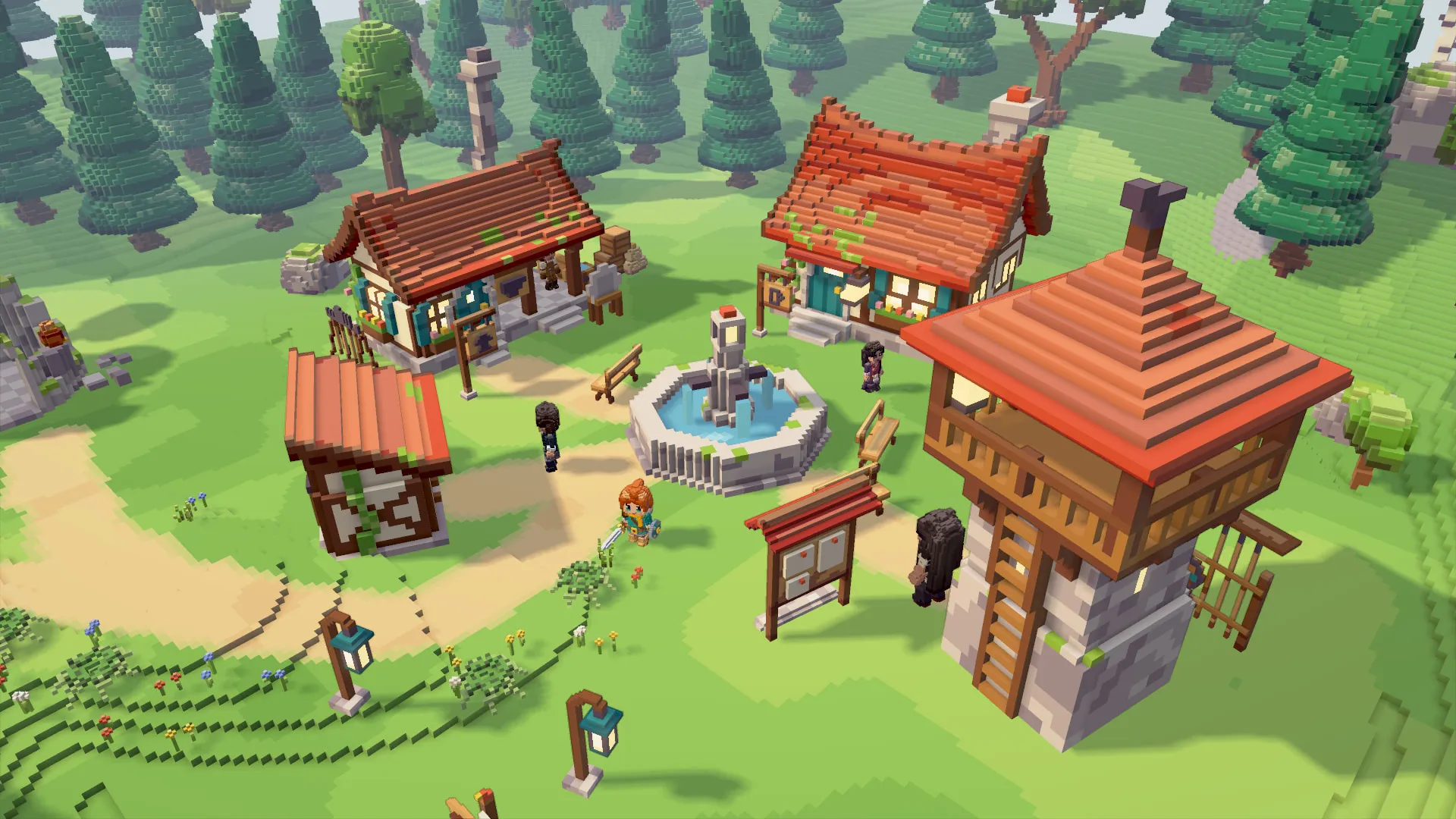
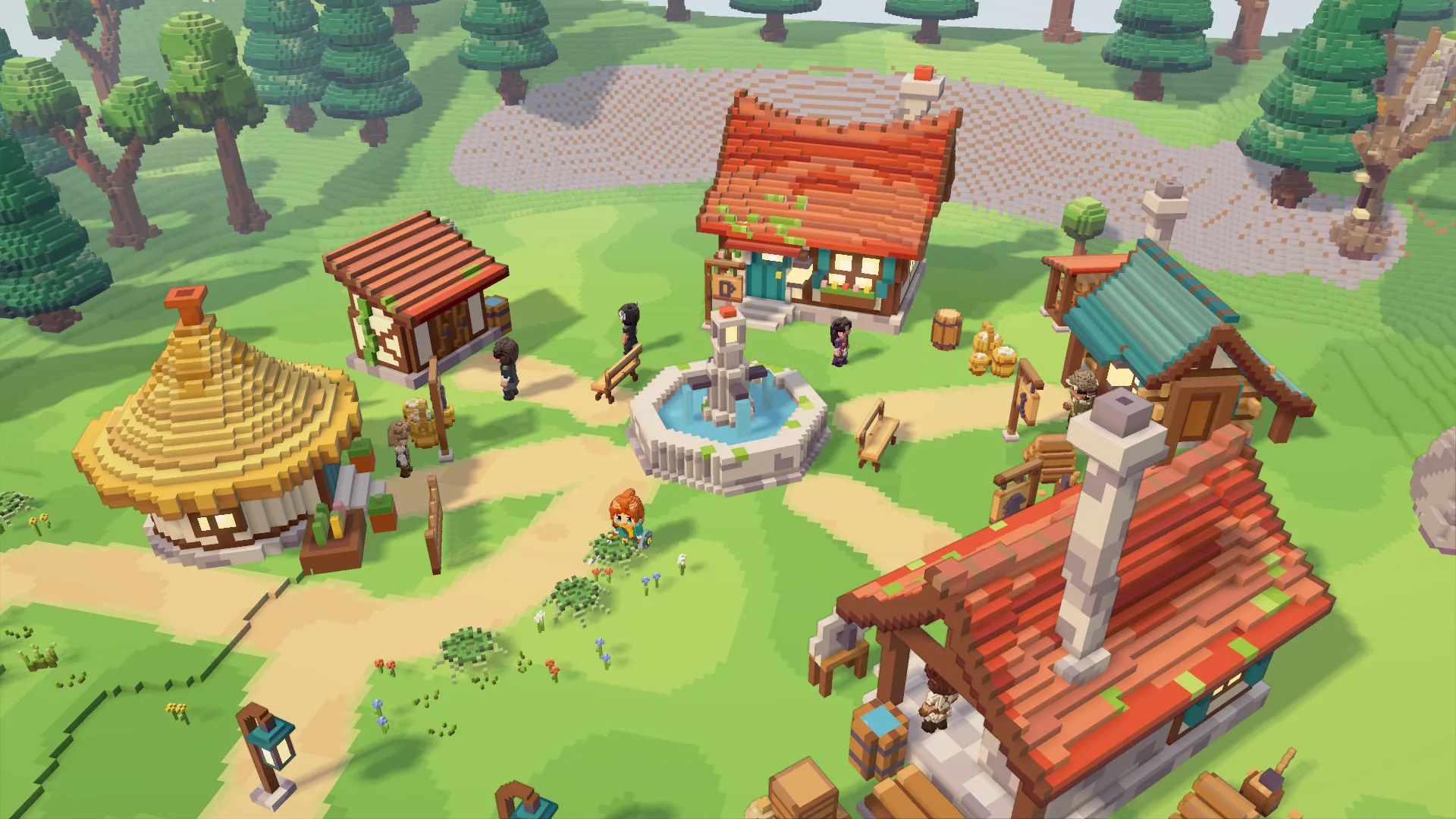
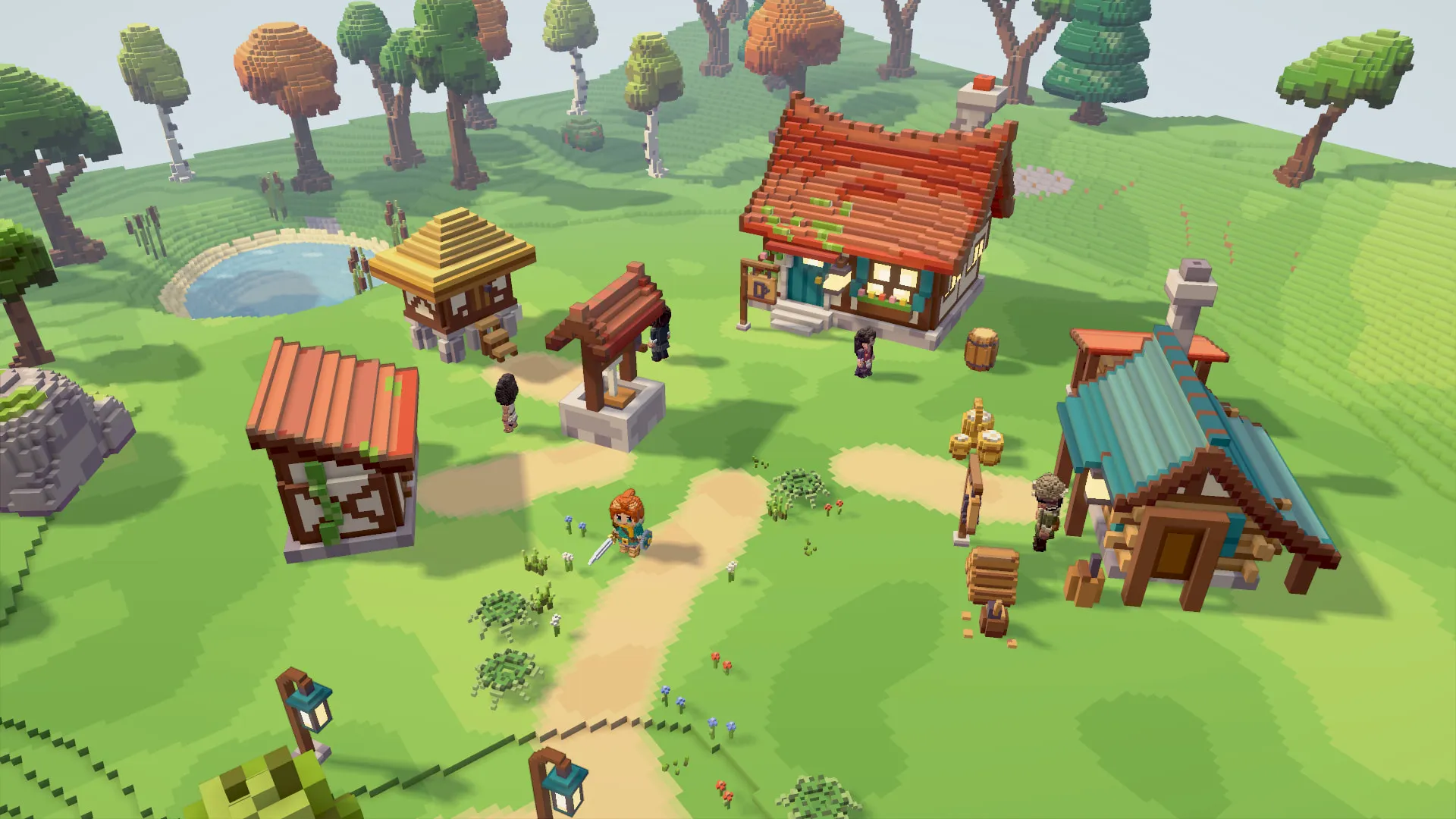
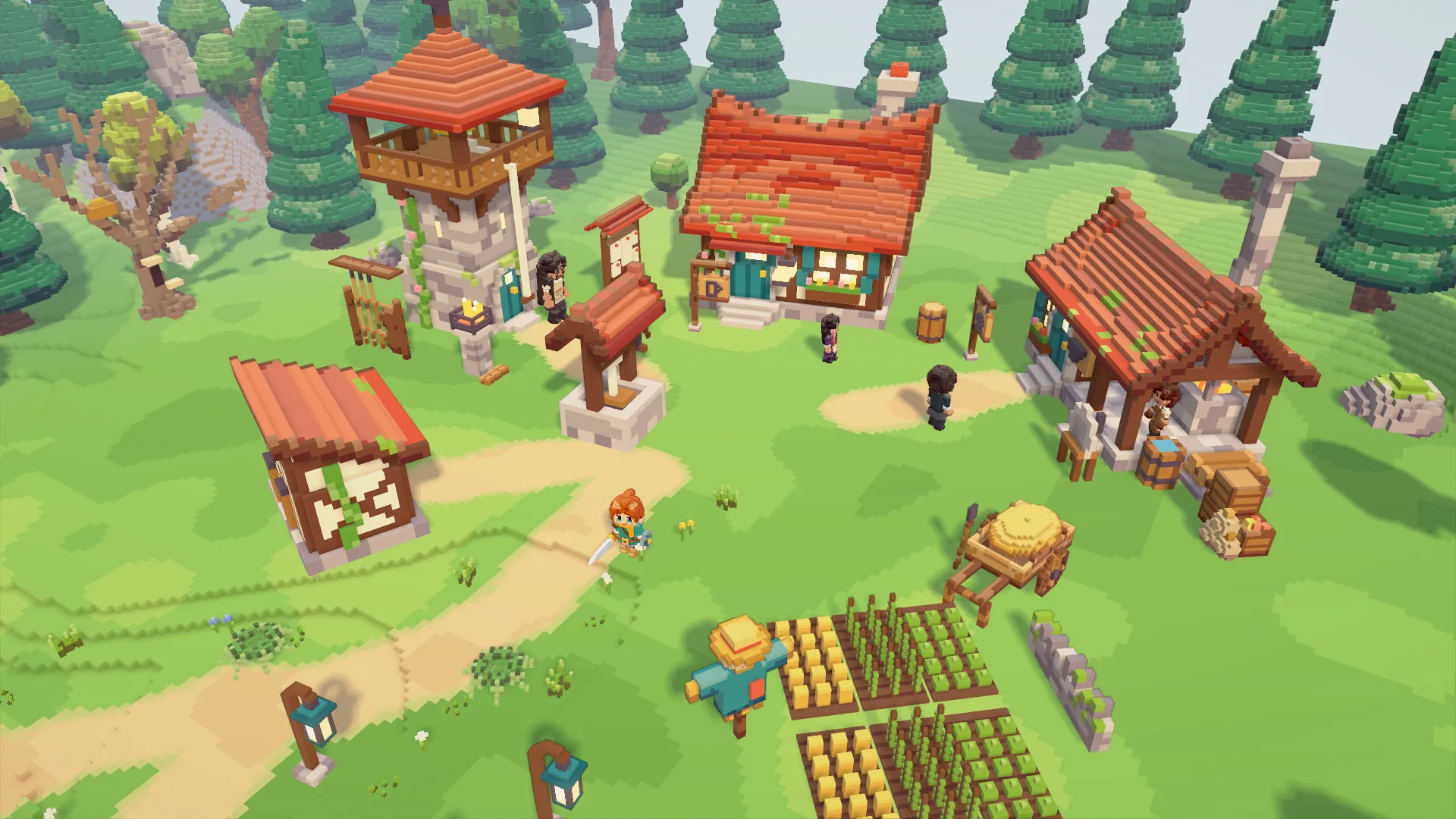
Generator v2 uses that library. It builds two kinds of villages:
- path villages, around a square with a fountain, with shops and a workshop, in small or medium sizes;
- rural villages, with farmsteads, a vegetable garden, a barn and a hunter.
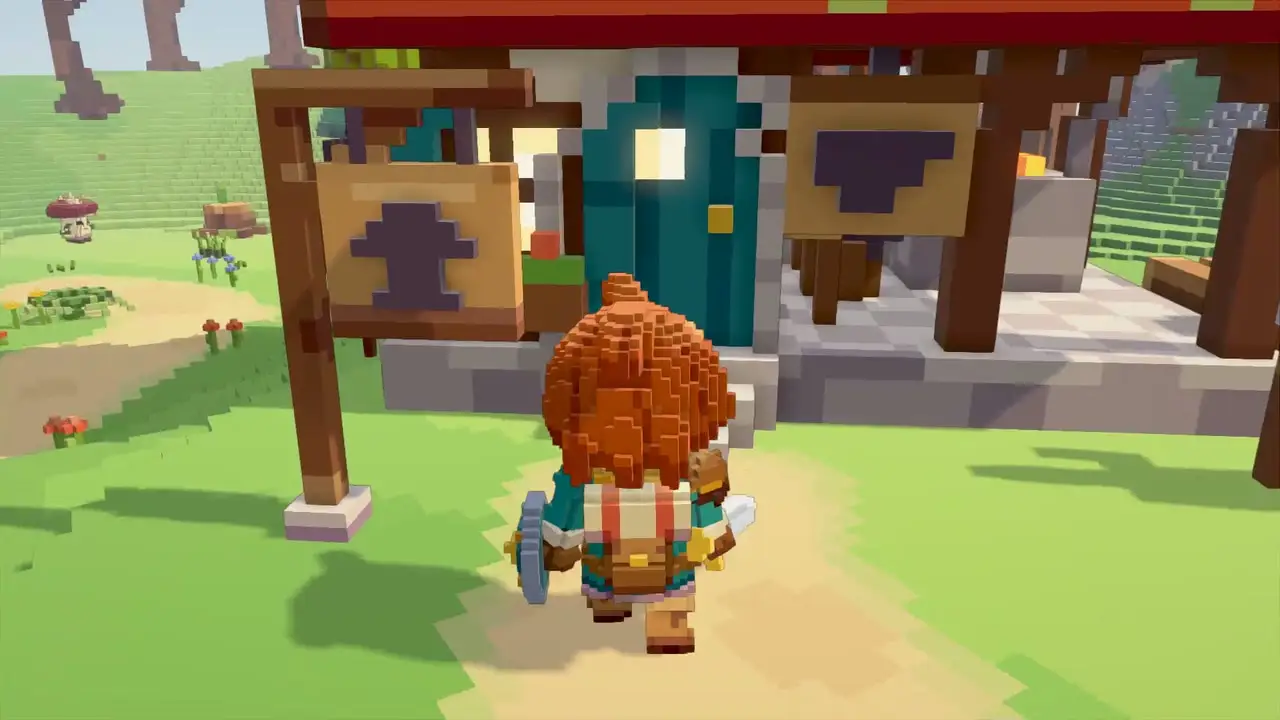
Crafts come as whole sets rather than loose props, and the people who work them stand where they belong: Brásia at the forge, Quelmo beside the market stall, Arvel at the hunter’s cabin, Índira by the drying herbs and Bramor at the watch post, each with a gesture of their own. Workshops and ruins have real collision inside, so you can walk in.
Ruins, and something to find
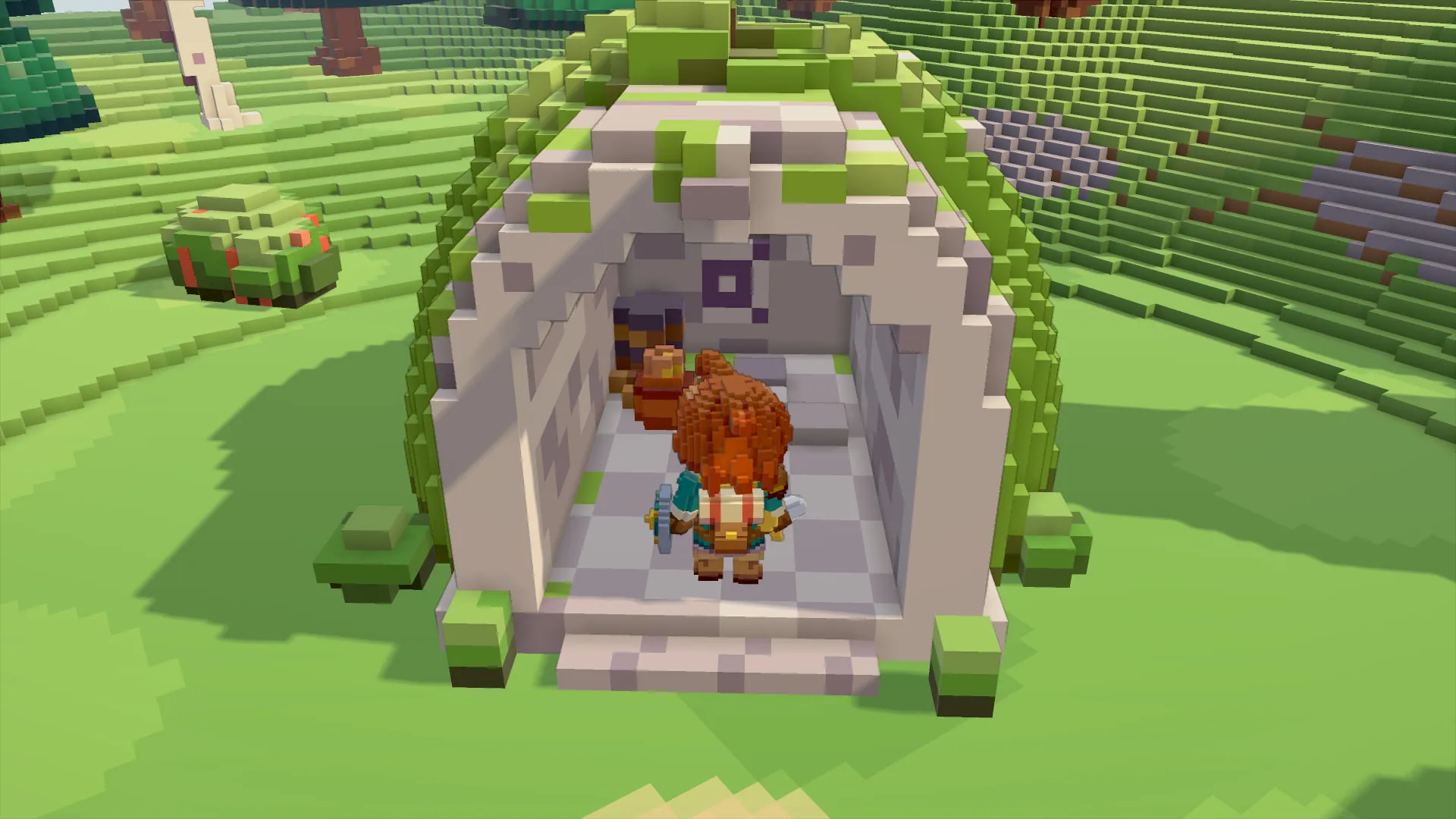
Outside each generated village, a ruin waits at the end of its own trail. There are four kinds: a collapsed house; a fallen tower you can walk into and climb; a buried vault dug into a slope, with a roof and a single slit of light; and an abandoned farmstead with its gable, pen and trough. Some are joined by a twisted tree.
Each ruin holds a discovery. The first one sits in the ashes of a hearth: a pot of coins, which stays visibly empty after you take them. Discoveries are recorded in the journal by the kind of place they came from, so a world gradually fills in as you explore it.
A world never changes under your feet
The quiet rule behind all of this matters more than any single building: a world keeps the generator version it was born with, forever. Worlds created before v2 still open exactly as they were, and new worlds are born on v2. When the generator changes the result for any seed, that is a new version, never an edit to an old one. Before v0.8 was closed, 300 seeds of the first generator and 200 of the second were compared, fingerprint by fingerprint, with the previous version to prove that nothing had moved.
That is a promise to the player: if you leave a world, it will be there when you come back — same trail, same ruin, same tree.
Small fixes that make places feel solid
Some of the work was about the camera and the floor rather than the scenery. Inside the fallen tower, the camera used to end up pressed against the hero’s back in about 41% of frames; the tower now cuts away only the part between the camera and the hero, and that number fell to about 2%. Floors inside buildings are the floors you see, entrances got stone steps, and the jump became a little higher and easier to steer, so rocks, stumps, crates and low walls can be climbed.
What is still missing
Each world is currently a single region. The camera still has a few rough spots — it brushes the wall when you back out of the fallen tower, and it stays short under the vault’s low roof. And while the villagers have places and crafts now, most of them only have a few lines to say.